Dancing With Noah

Just messing around, getting triple doubles

Monthly Archives: October 2013

Strange Satisfactions

steve-nash-dwight-howard-si-cover

Less than Fun

I’m a Lakers fan. Make no mistake about it. Beneath all my demands for fairness and bridging the rich-poor gap acrimony, I still cheer for the Lakers and their “see money, throw a problem at it” philosophy. So you can imagine my curiosity last year when I’m watching the Lakers slowly implode like a basketball version of an ugly, slow, painful deterioration of something or someone you know. Maybe it’s like when Brittney Spears fell off the rails in public and her fans just sat there and watched and they probably wanted to help her … “If I just had a chance, I could help Britt.” I can see some Lakers fans convinced they had solutions to the incurable problems the team had last season. But not me. I wasn’t one of those fans. I sat back and watched in enraptured entertainment. Kobe Bryant, Dwight Howard, Steve Nash, Pau Gasol. So many of us presumed that the star power alone would blind opponents, leaving them defenseless to an onslaught of well-aged skill and Howardian beastliness down low. And when the reality of age and fragility set in and the team underachieved for so many games, those shining stars dimmed to a cynical glow and Lakers fans frowned and grunted through an extended shit show where nothing made sense and everything went wrong.

All the while I sat bewildered, but unexpectedly entertained. In the NBA more so than the NFL or MLB, you can pick a handful of contenders at the beginning of the season and be fairly confident in your assessments. For all of us to whiff so badly last year; including the Kupchaks and Busses of the world … well, it was like watching a Hollywood blockbuster with one of our favorite action heroes as the star, but only the script goes off somewhere. The hero doesn’t fit the prototype we’re trained to recognize. Superman can’t change into his blue spandex in the phone booth let alone fly through the air. The Batmobile catches a flat and Bruce Wayne has to wait for Alfred to show up and change the tire. Meanwhile, Lex Luther and the Joker are taking a big ol’ dump on Metropolis and Gotham. That was the Lakers we saw last season.

Now in the fall of 2013, on the cusp of another NBA season, I’m all settled in, prepared for a crummy Lakers campaign that rivals the miserable outcomes of the post-Shaq Lakers like 2005 when Kobe “led” the team to 34 wins. But the difference is obviously that we’re prepared for it now. That preparation or expectation is the critical piece. When we know what to expect, we can maintain an even keel while still experiencing fluctuations in emotions. It’s the unexpected that challenges our conditioned responses.

You might be wondering why I’m just now drifting back to these Lakers memories. After all, we’re several months removed from the realization that the Lakers were not who we thought they were. A couple of my other favorite teams are presently walking through their own purgatories of expectation and I’m reflexively flashing back:

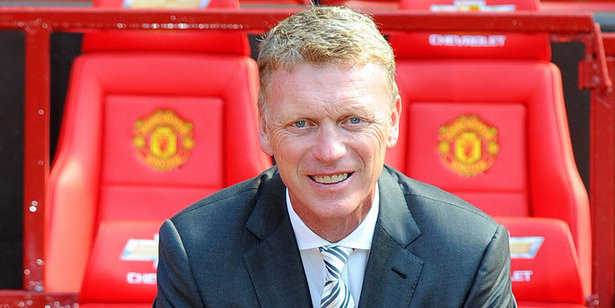
The current Manchester United team, another team I support (go ahead, make your front-runner jokes, but know I’m a long-suffering Cubs fan as well and experience both sides of the winning/losing of fandom), is enduring a challenging season with their new skipper, David Moyes. Moyes is replacing the living legend, Sir Alex Ferguson, who managed the world’s most recognizable sports franchise for over 26 years. In that span, he etched out a profile for himself that, on a global scale, exceeds that of Pat Riley, Red Auerbach, Phil Jackson and all the rest. Ferguson was an anomaly in the English Premier League where clubs cycle through managers more frequently than most of us go through a pair of jeans. United has mostly the same roster they had last year when the dominated the league and secured the title with multiple weeks still to play. It was fantastically anti-climactic and Ferguson left the new manager with a sturdy foundation on which to build a new legacy for himself and his new club. Instead, nine matches into the new season and United has struggled with a miserable defense that is regularly outplayed and compounds their shortcomings with knuckleheaded decision making and lapses in discipline. Yet … as I watch the team, I’m taking a strange satisfaction in the struggle. It’s not a sporting masochism. In the case of United, there’s this part of me that’s enjoying the uphill climb of this underachieving group. Maybe it’s because it’s still early in the season and I have faith that they’ll figure it out, that patience will win the day. Or maybe it’s just the feeling of stepping into a different, less comfortable role. Maybe I feel better being on more relatable terms with my friend who’s a Tottenham supporter? Or maybe I’m just a confused elitist who’s confusing the struggle with a footballing equivalent of slumming. Either way, it’s a more engrossing feeling than the anticlimactic sprint away from a pedestrian pack.

David Moyes

David Moyes

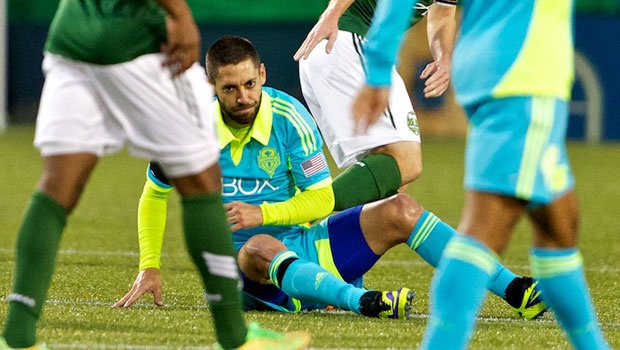
At home, my Seattle Sounders are flailing through the final few weeks of a grueling MLS regular season. Where the team was riding the natural high of an eight-match unbeaten streak that saw them climb to the top of league standings, they’ve now lost four straight matches by a 2-12 deficit. The Sounders haven’t won a match since mid-September. Players are hurt, the defense is in shambles, luck favors their opponents and yet, I find their matches more magnetizing than ever. I tune in or go to matches wondering if this is the game they turn it around. I anticipate the euphoria that must come with a break from these autumnal doldrums. With the MLS playoffs a week away, the Sounders somehow backed into the playoffs, and instead of drinking myself to sleep or crying tears of blue and rave green discontent, I’m cautiously hopeful that things will turn and we’ll look back on this rough stretch as nothing more than a funky smelling aberration. Something to share a beer over and thank the soccer gods it’s passed.

Familiar site. Not fun to see.

Familiar site. Not fun to see.

Let’s be real here … maybe I just don’t know how to be a fan. Maybe there’s some twisted gene hiding in my DNA that’s afraid of the pressure that accompanies a winner. Maybe I just don’t get what it means to be a fan, because I’d expect a different reaction. I’d expect to be pissed off or pouty about these things, but I just accept it with curious observation. The 2013 Lakers, Sounders and Man United teams have stumbled into strange playoff positions with dust-covered aging rosters and defenses that can be exploited by younger, less-skilled opponents. And I sit back and take it all in with a chuckle at the unexpected deviation from the narrative and the strange satisfaction I feel from not knowing what’s coming next. The Lakers, Sounders and United … my teams, my disappointments, my entertainments through winning, losing, and all points beyond and between.

The Timeless Legacy of Bison Dele

In the October 21st issue of Sports Illustrated, the one with Kobe on the cover, the always professional, crisp-writing Chris Ballard wrote a thoroughly-researched and touching piece about the life and disappearance of Bison Dele; a former NBA player formerly known as Brian Williams. If you’re unfamiliar with Dele’s story, I’d highly recommend Ballard’s piece. In lieu of its online availability; here’s a quick, far-too-brief summary (Ballard’s piece as posted online after I wrote this and can be found here):

Williams was a curious, artistic man with world class basketball ability. He reached the Mount Olympus of basketball achievements – an NBA title. And at the age of 29, Dele walked away from the game. He traveled the world – Lebanon, Australia, New Zealand, Tahiti and had intended to sail all the way to Hawaii from Tahiti. The final trip was made with his brother, Miles Dabord (formerly Kevin Williams), his girlfriend Serena Karlan, and the captain, Bertran Saldo. Somewhere along the way, Dele, Karlan, and Saldo disappeared. Dabord later surfaced in Phoenix, was seen in Mexico and died in a San Diego hospital a few months after Dele’s catamaran set sail. Dabord’s death was ruled a suicide while the bodies of the other three were never found. While no evidence exists, it no longer appears Dele & Company are with us.
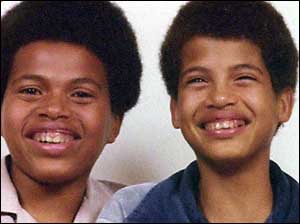
Patrici Phillips2 .jpg

This happened back in July of 2002; somehow over ten years have passed. I was 21 at the time, in college and followed the story from afar. That Dele had changed his name was peculiar enough in a league where a follow-the-leader mentality is so strong. I remember him as a very good player; one of the better bigs the Bulls had during any of the championship seasons. I remember him being very intense on the court with those piercing green eyes that added to the mystery of his person and intensity of his play. At the time of his disappearance, which was even more confusing because Dele and his brother had both changed their names so news stories often mentioned multiple names and made it seem like more people were involved than there actually were, details kept trickling out that increased my intrigue in Dele. Keep in mind, I was 21 going on 22 at the time; heading into my fourth year of college, still attracted to the romance of the alternative Beatnik lifestyle and Dele, in all his willingness to step away from the golden handcuffs an NBA contract affords, was a fascinating and tragic story.

All these years, Dele’s story has sustained my interest. If someone drops a Dele reference, I try and insert myself into the conversation. The topic excites me, it invigorate me. And as I read Ballard’s SI piece, which so elegantly did justice in profiling the man Dele was and how he became that man, I started to make the connections to the magnetism of Dele’s story and my own experiences. If you’ve read Dancing with Noah with any regularity, you’ve likely picked up on themes of pain, loss, the intrigue of lost potential. Whereas my focus here has always been about who or what a player could’ve become if he’d stayed healthy; how the NBA landscape would’ve changed if Greg Oden and Brandon Roy were healthy; how these painful splashes reverberate out and change the basketball panorama overtime. Well, Dele’s disappearance didn’t have much of an impact on the NBA’s future. For me, the allure of Dele was his maverick eccentricity. The strength of his individuality to step away from a $36-million contract is a courageous and enviable trait for me (and some might call it a stupid or poor decision – hence the courage to make it). Furthermore, there are elements of Dele’s spirit in this blog’s namesake, Joakim Noah. Both players have partaken in rich, vibrant existences off the court where music, art, and individual celebration are mutual themes. It only makes sense that the ethos that attracted me to Noah attract me to Dele as well.

In Ballard’s piece, he recounts a story of Dele reading a biography of Miles Davis and tearing up during the reading. A teammate asked him why he was crying and Dele responded, “I just wish I had the same passion for basketball that Miles had for music.” Dele was more comfortable financially than most of us can ever wish to be so I don’t want to go overboard in honoring him for walking away from a job he didn’t love when he was in the rare financial position to not be dependent on a career, but in a modernity where many of us feel trapped in soulless, thankless careers, Dele offered a hopeful alternative of escape; the pursuit of self through travel and adventure.

Bison Dele was a beautiful, open human being who wrestled with his own monsters like so many of us do. He had a troubling childhood and a problematic relationship with his family that drove him halfway across the world. He was willing to walk away from the material world our culture values and explore his own need for meaning. While doubtful it was his intent, the echoes of Dele’s spirit can still be heard, over ten years after his disappearance and will continue to be both a tragic and hopeful tale for anyone willing explore it.


*Note: I don’t write this to mythologize or hold Dele up on a pedestal of any sort. Rather, to communicate my experience with Dele’s free-spirited decision to break away from what has the appearance of being a dream life full of money, security, women, competition, friendships and games. As Dele’s and Dabord’s own mother put it, “Brian was not a saint, and Miles was not the monster he’s been made out to be.” Dele was far from perfect, but within that imperfection was fully and complexly human.