Dancing With Noah

Just messing around, getting triple doubles

Category Archives: Uncategorized

JC of the Day

Aside from the petty, but intriguing Marcin Gortat/Robin Lopez flap, it’s a slow day in the world of hoop. Fortunately, Youtube is a repository for Jamal Crawford clips that will dazzle all summer long, beginning with this gem (stay tuned for a feature-length post on the big JC):

I’d Never Leave in Summer

Unlike the NBA, I’m back. Finally. After weeks of traversing the middle west of America, then returning home only to host the lost and wandering spirits of my friends and family, I’ve come back to this neglected blog with warmth and caring. I don’t want to care, but I can’t even help it at this point.

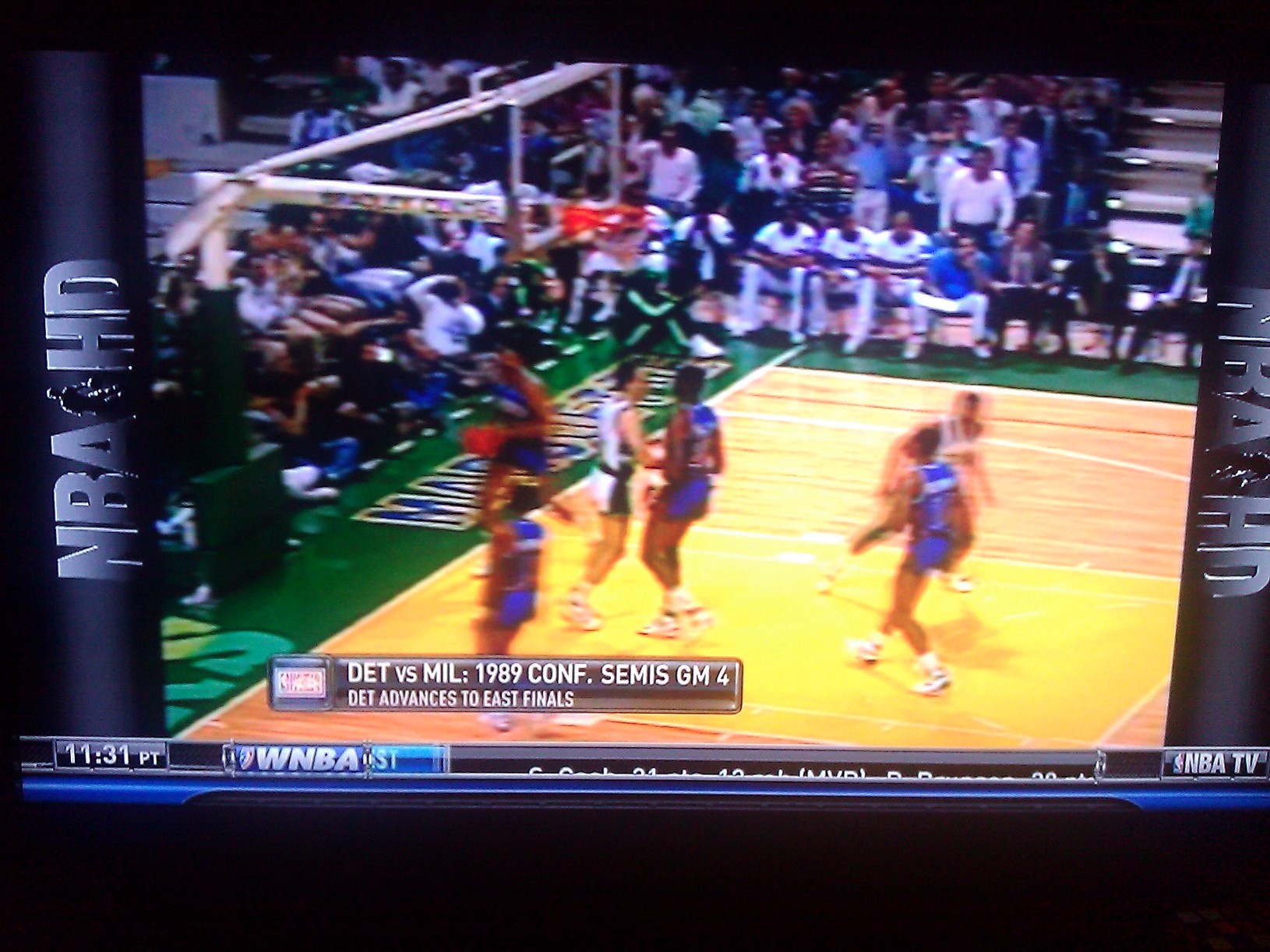
What the fuck’s happened in the past month? We lost Yao Ming (did the Chinese government take any responsibility for this prolonged assassination or was his destiny to be that of many young, bright, shining stars? To leave us too soon? If he had retired at 27, conspiracy theorists would’ve had a heyday.), we found out that Zbo extended his checks and is essentially lockout proof (there’s clearly a lot we don’t know about Zach Randolph or NBA salary options for that matter), Kobe, D. Rose and Durant made $400k each for a pair of exhibition games in the Phillipines (Sam Amick @ SI), NBA TV foolishly spoils every single game in its “Greatest Games” series not only by telling us who won in the cable description of each game (who writes these descriptions?), but even going as far as rubbing the outcome in our basketball-starved faces (see the picture); it doesn’t matter that we probably know the outcome already. It matters that the slightest bit of suspense, the little shred of unknowing is obliterated and I can’t help but imagine David Stern somehow takes pleasure in this. He doesn’t, but he’s in a bad position and an easy target at the moment. Who thought Stern would put himself in a position to be the guy with the bag in his hand?

A lot is happening, but we have no results. Each story or blog that pulls the curtain back and shows us a little bit more of the NBA’s behind the scenes revenues (great post by Ken Berger) reveals a league that feels like it’s trying to deceive. Each blurb or rumor about players mulling over international options to become lords of Chinese provinces, basketball playing Czars of Russia or creating the Turkish version of the Super Friends at Besiktas is a tiny win in a global battle. Yes, I’d love to see the owners collapse under of mountain of paper cuts.

I’m with the players on this one and it’s not even up for debate. The NBA made its bed by paying guys like Rashard Lewis nearly $20MM/year (karma for having to sit in the green room so long on draft night?) and giving Joe Johnson Floyd Mayweather money when he’s more like an aging Shane Mosley without the gentlemanly qualities. But it’s not Joe’s fault or Rashard’s fault (somehow it could be Mayweather’s fault). It’s not their agents’ faults. Even these two guys, symbols of obese salaries, of players taking payrolls hostage; even these salaries aren’t the real problem if you believe the numbers that keep pouring out of the sky like July rain in Seattle. For every report and fact we hear about how much money the league has made, the NBA and NBPA will have a different slant and spin. The truth is likely residing somewhere in the middle covered under a pile of steaming bullshit that Stern and Adam Silver (with a little help from Billy Hunter) shoveled there. I don’t know the truth and can’t even claim to because the amount of psychological warfare playing out in the media has me confused into believing Sepp Blatter is preventing Kobe from signing with Besiktas and David Stern has actually buried bodies somewhere (under some futuristic, revenue-generating arena no doubt). As of today, it’s the NBA and its owners that feel inflexible and deceptive. The owners and GMs sign the contracts just like the players and anyone who knows anything knows that Rashard Lewis was never worth the kind of money Orlando splashed on him. I can only imagine Shard and his agent booked the fuck out of the Orlando front office before the ink even dried. “Don’t look back, just go!”

I don’t want to care about this in the middle of summer. I want to eat hotdogs, watch Sounders games and sleep in the sun at Volunteer Park while people ride by on unicycles. Instead, I watch old games I already know the outcome of on NBA TV and see the NFL doing it right on ESPN. I prefer the cold comforts of apathy, but I’ve invested too much time into a league that gives me and owes me very little.

Our Time

I guess there’s a lot to take away from the draft and at some point during the dog days of summer’s labor discussions, perhaps I’ll try to organize my thoughts on it. But today’s just about a trade that occurred during the draft that for some reason rankled me.

The Nuggets gave up Raymond Felton for Andre Miller and the 26th pick, Jordan Hamilton. Head-to-head, it’s a fair trade for both teams as Felton’s still priming while Miller’s getting older and grouchier. Denver’s getting a few younger pieces almost for free. They’re cool with the deal because Miller’s willing to do what Felton wasn’t (and shouldn’t have been): Back-up and mentor the young Ty Lawson. It’s likely the Nuggets were never going to keep Felton. Lawson’s their guy and has been steady proving he can take the car out for a spin without papa (Chauncey Billups) or big bro (Felton) sitting shot gun.

So what’s wrong with a teacher, especially a willing teacher? Absolutely nothing. Maybe my gripe here has to do with a few things: The teacher is being paid $7.8 million this year. The teacher/back-up is going to eat into young Lawson’s minutes which on a per 36-minute basis produced 16pts, 6.5 assists and 1.4 steals while shooting over 50%. Even if Lawson/Miller share the backcourt for stretches of games, it’s going to take away from Lawson’s leadership and point guard opportunities.

From Denver’s perspective, the benefits are easy to identify: Andre Miller’s been around the block (in Denver once already and four other NBA cities) and has a clear understanding of his role on any team. This is part of the reason George Karl went after the former Nugget (Karl coached him during his last season in Denver). So far, everything’s peachy in Denver with Miller reportedly amenable to coming off the bench. He can continue the tutelage that Billups started and further Lawson along in his NBA PG studies while providing starter-quality production off the bench. This fits in with the depth the Nuggets have been cultivating—other than Melo, no Nugget played more than 33 minutes/game last year. Nine players saw at least 20 minutes/night and it’s hard to argue with Denver’s post-Melo success. Additionally, it relieves Lawson of carrying all the duties that come with being the court general. Over 82 games, that weight can burden any man.

The numbers also support the move. In 31 games Lawson started in 2010-11, the Nuggets won 22 and lost 9—winning 70% of their games. In 27 games where Lawson played more than 30 minutes, Denver was 16-11 (59%). In 10 games he played 35 minutes or more, Denver was 6-4. For the season, the Nuggets were 50-32 (~61%), so the biggest place the Lawson lift was visible was in games where he started. Everything out of Denver is pointing to him being the Nuggets starter in 2011-12—the same role he took over after the Melo/Billups trade. He started the final 25 games with the new faces from New York so it’s not fair to credit him with the team’s late season turnaround, but his availability and improvement made it that much easier for Karl to fill in the hole that Billups left.

So why is my gut reaction to less Lawson opportunities automatically anti-Andre, anti-time share? Philosophically, I’m open to anything that stands apart from convention. Don Nelson never reached the Promised Land with his small-ball, run and gun style, but I was on board anyway. Doug Moe and Mike D’Antoni had partial success, but were both thwarted by convention. Teams have tried small ball, big ball, gimmicks, wacky and wild game plans and I love and respect them for it. I’ve defended the Suns version of D’Antoni for years and for what? Because I love the break from NBA norms—which is exactly what George Karl’s doing in Denver. Unless you count the delicate Danillo Gallinari, Denver has no go-to guy—huge NBA no no. Instead of a standard 7-8 man rotation, they roll deep with anywhere from nine to eleven players getting heavy minutes. And lastly, most egregiously, instead of giving Ty Lawson the freedom to run around for 35-40 minutes, they’re stifling him with the presence of old, crotchety Andre Miller and it clearly upsets me or else I wouldn’t be writing over 700 words about it.

Karl’s going against the NBA grain here and I’m staying stuck in a world where a good, young starting point guard should get 35-40 minutes a night. My motivations for being anti-timeshare come from the same place that NFL running back-by-committees grind my gears. In most timeshares, one of the players is better and gets a few more reps; whether it’s a change of pace thing or just getting guys an extra breather. For running backs and Ty Lawsons, the split is the ultimate in team sacrifice. The individual gives up opportunities for the immediate benefit of the team and potentially for the longer-term development of the individual. The fans get more Miller and less Lawson.

As I was always aware, my beef with Denver’s approach to the point guard position was associated with my own inability to open my mind to the possibilities unlocked from sharing. I’m still not sure what Karl’s ultimate motivations are, but I’m willing to go into this open-minded and not pass judgment until we’ve arrived with both feet (or all four feet?) firmly rooted on solid ground.

Reflection Eternal


Where to begin on this summer night in June? The NBA’s gone on its annual break and we don’t know if or when it will return. I’ve spent a decent part of the last few days reading through a mix of spiteful venom and corny fourth quarter jokes directed at LeBron James. I spent some more time seeing pictures of Dallas’s post-game celebration in the South Beach Miami clubs. This is our league now: The joys are documented on cell phone cameras and DeShawn Stevenson t-shirts while the lows go underground and are speculated against and attacked.

As I texted my buddy Hamilton earlier, we have the summer (and maybe beyond) for endless speculation and reflection. So I’ll start reflecting now before my memories fade into the abyss of an online archive.

I never, ever thought this Dallas team would win the title. Way, way back in April when we found out the playoff matchups, I saw Dallas vs. Portland and immediately circled it as an upset win for the Blazers. I didn’t do it just because I thought the Mavs were pussy soft—which I did think. I did it because as late as April 6th, the Mavs had gotten caught up in a four-game losing streak; two of those losses coming to the far-from-physical Golden State Warriors and their future first round opponent, Portland. A four-game losing streak is no microcosm of an 82-game season, but that losing streak at that time of year when Dallas was battling for a number-two seed was just one last bit of 2011 confirmation that this team didn’t play defense and couldn’t win when it mattered. The stats told a different story about their defense, but I’ll get to that shortly.

On top of the bad timing and my poorly constructed idea of this Dallas team’s identity, was their opponent: Portland. Despite the bad karma from the Darius Miles situation, these guys came together when Brandon Roy went down. On the increasingly large shoulders of LaMarcus Aldridge, the spiteful wiliness of Andre Miller, the stretchability of Marcus Camby and the late season sneak job addition of Gerald Wallace, the Blazers looked and felt like a team cresting into April. The way the Blazers consistently challenge the Lakers, there was a genuine sense of relief amongst Laker fans when Dallas won the series.
But goddamn, I was wrong and so were any Lakers fans who embraced a Mavs matchup in the second round. Dallas introduced us all to a cold steel resolution, that mettle you can’t buy at the store or even pray for (it wasn’t your time, right, LeBron?). Beneath the flesh of that Portland series, Dallas revealed what turned out to be their leader’s calling card: All-out assault. I wouldn’t go so far as to call it blitzkrieg in a 7-seconds or Less, Phoenix Suns style, but this team was unprejudiced Terminator-style attack. Portland, Los Angeles, OKC and Miami got it the same. After Portland though, it all came together—or maybe it was there all along and I missed it; overlooked, because I had already written it off because it looked like the same group Dallas trotted out every year—Dirk, Terry and Kidd. Dismissed it because if anything, the NBA is predictable and we don’t get late-career titles unless there’s a drastic shakeup. Look at the last thirty years of NBA champs and you won’t see anything that resembles Dirk or Dallas. Veteran teams that won titles did so with a major addition or by becoming new teams (Celtics becoming the Big 3, Lakers adding Gasol, Hakeem needing MJ to retire, the Admiral needing Duncan, the introduction of Magic and Bird, the unification of Shaq and Wade) or they went the wait-my-turn route (MJ, Isiah). (Side note—the only other non-traditional title team was the 2004 Detroit Pistons.) In the playoffs, the Mavs completed a pilgrimage they started way back in 2008 when they hired Rick Carlisle.

I’m not trying to say we should’ve expected this out of Dallas. In three of the last five years, this Mavs team lost in the first round (two times were to lower-seeded teams). When I was in Vegas a couple weeks ago, watching Miami plow through a shell-shocked Bulls team and seeing the Mavs fortifying themselves against a trial and error OKC squad, I kept insisting that you can’t change your identity over the course of a few series’. To some extent, we all are who we are and I was confident that Dallas would show that baby soft face soon enough. All previous evidence of this team and the league as a whole indicated they weren’t a championship team. I don’t think my primary point was wrong: the Mavs playoff team played exactly to their identity. I was wrong about that identity though—drastically wrong. Looking back at the stats over the course of the past season, it starts to make more sense that Dallas had been coming together. They finished 8th in the league in defensive rating (points allowed/hundred possessions) and 9th in opponent’s effective FG%. The improving defense (this was their best defensive rating since the 67-win team of 2006-07 and their best defense under Rick Carlisle) no doubt helped them rip off the following streaks during the regular season: 12 games, 10 games and 8 games. More than half of their wins were part of a streak. This team had stretches of 18-1 and 16-2—with no overlap. Aside from those two streaks where the Mavs combined to go 34-3, their record was 23-22.

They caught another streak in April and went 16-5 in the playoffs. Counting the four-game win streak to end the regular season, they finished 20-5. I was wrongfully defiant all the way to the end, expecting Miami’s cream to rise to the top, but in all ways Dallas was the dictator and forced the game on their terms whether it was in Miami or Dallas.

I mentioned above that Dallas looked the same—Jet, Dirk and Kidd. While their counterparts were given names pre-ordained for the lights—Bron, Wade and Bosh—they weren’t given the pieces Mark Cuban gave the Mavs. It took the whole crew, from Brian Cardinal’s pasty American impression of the Euro-flop to Tyson Chandler’s infectious positive enthusiasm to JJ Barea’s inconceivable drives to DeShawn’s Dirk-bolstered swag. Beyond the “it takes a village” vibe of the Mavs, the main components understood the utilization process. Trust, camaraderie, accountability, morale—all that awkward junko speak that corporations try to force—were embodied by this Dallas team and the result was the attainment of eternity.

Winning an NBA Championship (unless you do it in a strike-shortened season, Pop) is the only way to reach forever in the NBA. It might be some bullshit, but every black and white stat, every subjective award, every label, performance and reputation is up for debate and attack. Someone’s always trying to take a dump on Wilt scoring 100 points or averaging 50 points/game for an entire season. Someone else is disputing MVP awards (incredulously asking how Steve Nash has the same amount of MVPs as Shaq and Kobe) and there are even intelligent people claiming MJ wasn’t the greatest. It’s all fair game and there’s even a loophole to attacking players with rings. Jason Kidd’s ring with Dallas doesn’t carry the same luster as a title with the Nets would’ve carried. But for Dirk, oh the lovable, likable, indisputable grass roots feel-good story of the 2011 playoffs; for Dirk’s place in the history of the league, it’s the ultimate in accomplishments. It’s free from any asterisk, any qualifier, and any but. It’s free from dispute, completely pure and that’s rare in a sport and league where its followers are almost trained to argue and challenge every little thing with zest of religious scholars and interpreters.

Nothing else this season exists in the absolute world that Dirk Nowitzki’s and Dallas’s playoff performance does. They’re all alone as the eternal truth of the 2010-11 season.
 

You’re Never Really Alone

Game four on Tuesday was a glorious mess. I was stuck in a texting mood for the duration of the game and saw the themes and storylines that have taken time to develop rise up to the surface with faces grinning or grimacing (we see you, LeBron). If we weren’t sure who we were watching or what they stood for, we have an idea of it now. Of course, with a guaranteed two more games and potentially three more games, everyone—from Brian Cardinal to the great Dwyane Wade—can continue to work on their own personal definitions of who they are.

(Not to get all off topic here, but the Tyson Chandler/Eddy Curry connection is ignored far too often. These high school twin towers were going to paint the Chicago streets with Jordanesque parades. Instead, their careers, personalities and reputations rolled up on poetic fork in the road and without a glance in each other’s direction, they scampered on towards their destinies, amnesic to the other’s existence. I can’t help but wonder if either guy ever has daydreams or nightmares about what could’ve been.)  

Back to the present; above all else, Dirk Nowitzki and Dwyane Wade, the warriors returned to the same battleground five years later, have imprinted their individual brands on these finals. Dirk’s been doing it all playoffs and has a great hype man every couple nights in Mike Breen. Wade forced a bumpy ride through his old stomping grounds (haunted by the shadow of Mike?), but the rest of the crew was down for theirs. Now in the finals it’s Dwyane’s turn.  (If Wade and Dirk got together during the 2008 Olympics or the 2010 World Championships and agreed to meet in the finals in 2011 as a fifth-year anniversary of their first finals matchup, would the righteous scribes be as indignant as they were about the Wade/Bron/Bosh meetings? Wouldn’t it be a more interesting story if the big German and the native Chicagoan had some kind of hidden code of honor that was settled every five years on the court?)

Through the first four games of the finals, Dirk’s putting up over 26 points/game, pulling 10 rebounds/game and even blocking a shot a night. Against one of the best defenses in the league, this shit is not easy. Other than being white, he’s not like Bird. Other than having the flu in the NBA Finals, he’s not like MJ. He’s fucking unique in more ways than just being a dominant German in the NBA. His game is his own, but his relentlessness is his overlooked trademark. From the opening to the end of every game, he attacks, catching the ball at the top or in the mid-post, throwing shot fakes, hesitations and stutters, fading away into an arc of perfection, occasionally driving, but always attacking with one technique or another. But even heroes fail. In game three, it was Dirk’s turn to run out of classic-making magic. In the last minute of what ended up being a two-point loss, Dirk threw the ball away and then missed one of those jumpers that he does not miss.

His former executioner has been busy too: a hair under 30 points/game, 8 rebounds, over a block and 58% shooting from the field—for a two guard. If there was a symbol of vitality for the 2011 NBA Finals, it would be called Dwyane Wade and it would run faster, jump higher and try harder than other symbol you could find. Dwyane Wade wants to win more than anyone else. Some guys in jerseys in Dallas might disagree, but to the impartial observer, Wade’s lifted his effort to a new place and it’s lonely there because no one else in these finals is capable of joining him. For all the “In His Face!” moments Wade has produced in these finals, he failed and fumbled at the most inopportune times on Tuesday night. Where Dirk turned the ball over and missed a contested jumper, Wade missed a potential game-tying free throw and fumbled away a pass in the last thirty seconds of game four.

All along we thought Wade and Bron were brothers in arms, but night after night, it’s being revealed that Wade and Dirk are more closely related while Bron and Wade are maybe just friends (what up homie?). This isn’t part of the pile-on-LeBron sentiment that’s so prevalent on the internets. LeBron will have his opportunities (beginning on Thursday night), but as of game four two players have stolen the spotlight and are dueling for a right to history or honor or some shit. While the world continues to fume and flame and troll about the Decision and the audacity of superstars banding together, Dirk’s hitting up Wade on his burner and consoling him about the missed free throw and fumbled pass.

It's Deeper than Balboa & Creed

Gigged on Em

I was planning on writing a post about the angry radicalism of Kareem Abdul-Jabbar, but Bug and Hamilton convinced me to put it on hold and give Shaquille O’Neal his due so here I sit trying not to regurgitate all the post-Shaq sentiments I’ve soaked in.

In so many ways, this has been a season of change in the NBA. Beyond the obviousness of Pat Riley’s coup d’état in the summer of 2010 or the league’s youngest MVP ever, the playoffs have been a showcase for that cold hearted bitch named Time. Tim Duncan’s Spurs were womped by Memphis. Kobe, Phil and the Lakers were pistol whipped, bound, gagged and robbed of their three-peat opportunity by Dallas. The original Big Three of the 2000s, KG, Pierce and Ray Ray at least showed some heart in their demise at the hands of the new Big Three from South Beach. The proverbial torch wasn’t passed, at least not willingly. It was snatched from desperate, weaker hands.

So it seems fitting that Shaquille O’Neal—who at 23 knocked MJ out of the playoffs, was sacrificed at the altar of big men by Hakeem, threw punches at Barkley, had a verb created in his name in acknowledgement of his backboard breaking prowess and so much more (got to think his auto-bio will be Presidentially heavy)—retired this season when the league’s undergoing tectonic changes.

Along with Jason Kidd, Shaq is the last of the early 90s leftovers. The difference is Kidd never defined or represented any period of time in the NBA; he was just subtly dope with his triple doubles and Simon Phoenix dye job. Shaq came into the league with a posse, he rapped with the Fu-Schnickens, and breathed charismatic existence into Neon Boudeaux. Even if it was partially because of his size (in the 2000s, “How much does Shaq really weigh?” was one of the biggest mysteries/rumors in the NBA—7’1”, 400lbs? no shit?), non-basketball fans recognized Shaq. He took the Jordan marketing blueprint and put a younger, more entrepreneurial mid-90s spin on it. And even if his shoes looked like plastic snow boots and his raps were corny on a good day, it still had promotional value and made the big man money—who the hell knows which motivated him more.

All these entertaining pit stops over the past 20 years and that doesn’t even touch on what he was doing between November and June. Where Hollywood Shaq ends and NBA Shaq begins is a blurry area definable in the early 90s when Shaq was filming Blue Chips. In his opening scene he’s playing in some kind of abandoned warehouse gym (that happens to have a backboard and breakaway rim) in the bayous of Louisiana. He’s more myth than man and that’s the point when everything is always beautiful, because man can rarely live up to the myth that precedes him (Obama?). But then we arrive in gym with Nick Nolte, serenaded by the deep blues and we see Shaq for the first time being the power center to tilt the NBA away from the finesse of Ewing and Olajuwon, the muscle to counter the speed and athleticism of the Admiral. For once the man exceeded the myth. Shaq was Neon was Shaq—in personality and basketball ability, onscreen and off.

When he joined the Magic in 1992, he didn’t fuck around with fear for a second. He dunked his way into the pulse of the sports world. If someone with Shaq’s size and ability would’ve shown up in the 24/7 Twitter/Facebook world we inhabit now, he would’ve eclipsed the Blake Griffin buzz the way Blake enveloped John Wall mania. Shaq dominated the center position in an era when the league was deep with quality at the position—Dream, Ewing, Admiral, Mutombo, Mourning. Any of those players would give Dwight Howard fits. In his second season, Shaq went ahead and put up 29 points and 13 rebounds a night. Before Shaq, Moses Malone was the last player who pulled off +29 and 13—that was back in 1982. No player has done it since; except Shaq for a second time in 2000.

For all the inexhaustible superlatives and monikers that have defined the man for the past 20 years, it feels divinely appropriate that he had a bright, shining, easily identifiable weakness in free throw shooting: The Hack-a-Shaq method. Can you believe this shit has its own Wikipedia page? Think about your biggest weakness at your job. Maybe it’s something you’re acutely aware of and while you have to confront it at times because someone’s paying you a salary; you’d prefer to avoid it. Maybe it’s running TPS reports or cleaning the handicap stall or handling customer complaints. Whatever it is, you’re not that good it. You’re actually below average. Now imagine that a competitor found out about your weakness and at the most critical time of year—annual review, boss observing you in action, in the middle of providing service to customers—your competitor attacks that weakness. Come playoff time or close games; that was Shaq’s reality. In retrospect, a man with that much of an advantage had to have an equally great weakness. For all the greatness, we’ll always remember his free throw line odyssies.

Now it’s all done. The most physically dominant player I’ve ever seen is retiring. In a league of giants, Shaq dwarfed them all. The men he battled with and against are gone or walking into the sunset—Iverson, Duncan, Sheed, Kobe, KG, Webber. For that, it’s appropriate that Shaq’s retirement symbolically closes the door on a generation he owned and helped define. Today, the league is a lesser place without him.

And Like That, He’s Gone

I was an angry basketball fan last night when OKC shat the bed once again in the fourth quarter. I was texting out blames to Russell, Kevin, Maynor and especially Scotty Brooks. It was inevitable and Dallas somehow knew it with all their experience and come-from-behind poise and it grated me; grated the skin right off into a nasty little pile on my coffee table.

On that note, I decided to say goodbye to the Thunder for the 2011 season:

Russell Westbrook: You were the most intriguing player in the playoffs this year and in terms of basketball culture, you’ve made the leap. We all knew who you were and anyone who watched OKC knew what you were about, but by the end of the whole thing, I just wanted to give you a hug and tell you it’ll all be alright:

Kevin Durant: Was there a sadder scene than Durant at the game four post-game press conference? All gangly arms, legs; shoulders hunched forward and infinite sadness painted on his 22-year-old face with that damn backpack on asking, “What could I do?” We love you Kevin because it hurt so bad:

James Harden: Has Harden always been this good or is it a product of off-the-radar, covert development? Was OKC just playing possum for next year when they unleash this guy? Seeing him play point opposite Westbrook and Durant on the wings was watching living, breathing basketball genius—and then Scott Brooks snatched it away from us:

Nick Collison: I watched Collison play a few years in Seattle before the departure and was always impressed with his defense. He did the best job any single human could do against Zbo and Dirk and did it all by his damn Iowan self. This man is underappreciated.

Serge Ibaka: Don’t be scared, Serge. It’s all over now.

Kendrick Perkins: We all stood up and applauded the great Sam Presti after he made this trade; then the playoffs happened and we realized he was still hurt. Perkins was about as effective as a grocery cart with a brain would’ve been (as opposed to a grocery cart without a brain?) and was exposed by John Hollinger as being the biggest detriment to OKC’s success against Dallas. We know you weren’t healthy, but still, it was ugly.

Eric Maynor: You walked into my life as a warm, soft beacon on the horizon; something to cling to in a time of chaos and tumult. Then you betrayed me when you tried to slay Dirk on one play.

 Scotty Brooks: Jeeeeee-sus. I used to be a Scott Brooks fan and maybe there’s still a place in my heart where he can redeem himself, but when OKC calls a timeout and I immediately text people “Bad Shot Alert!”, it’s a fucking problem. And any arguments about Brooks being just a second-year coach or coaching a simple game because his team is so young are ignoring the obvious: Brooks was out of his league. Maybe it’s time to hit up Phil Jackson for some of that peyote:

I Guess Change is Good for Any of Us

There are all kinds of change, but the most lasting and legitimate kind of change comes over time. It comes from things like experience, trial and error, practice, habit, development and often criticism. For all the excitement of this year’s playoffs, two changes stand out:

The first change has been gradual, subtle but frequently targeted for criticism. LeBron James is an easy target and always will be in the same way that MJ was ripped before he won titles and the way Kobe has been attacked before and after winning titles. Losing, the Decision, the Global Icon, the commercials, quitting accusations, rumors of uncoachability, ridiculous free agent demands and mountains of attacks and assaults in print and spoken word—it’s all been thrown at LeBron and no matter what happens in the next few weeks, it will continue to pour down on him. In the process of amassing hate from all corners of the basketball-watching and consuming public, LeBron went through the growing pains apparently required of NBA stars: incremental playoff progress followed by inevitable defeat by the league’s senior gatekeepers. In Cleveland, Bron lost to a veteran Pistons squad, Tim Duncan’s Spurs in a 4-0 Finals sweep, the KG-led Celtics (twice), and somehow to a hot-shooting Orlando Magic squad. After all those playoff losses and criticisms, he’s finally getting after it with the kind of intensity we’ve always associated with Kobe Bryant and Kevin Garnett. In the fourth quarter on Tuesday night, with the game on the line, he put the clamps on Derrick Rose. LeBron was the best player on both sides of the court and was rewarded for his efforts with a 3-1 series lead.

A few years ago LeBron commented, “I don’t think I have an instinct like Kobe, where I just want to kill everybody.” Homicide aside, we saw the comments and took note. Kobe busied himself with back-to-back titles and three straight finals appearances while LeBron continued to get bounced out of the Eastern Conference playoffs. It’d be beyond naiveté to ignore the southern migration and the Wade/Bosh upgrades. Bron is surrounded by the best #2 and 3 options in the league. With those two stars flanking him, he’s managed to improve his overall game. He’s been named to all-defensive teams in the past, but we haven’t seen anything like the lockdown job he put on Rose last night or the dive-for-the-ball intensity he showed in the late fourth. Maybe it’s the support of Wade and Bosh or maybe it’s the relief they provide, but this LeBron is different. He’s playing with an energy usually reserved for the lesser-talented players of the world and he somehow has an endless supply of it. His post-play and post-game celebrations are indicative of someone who’s giving a damn—whether his outburst are aimed at critics, opponents or history doesn’t matter much. Focus and commitment are questions of his northern past.

The other change born of these playoffs: the stoic evolution of Dirk Nowitzki—a few weeks shy of 33 years old. The Larry Bird comparisons are inaccurate, but Dirk’s likely been the MVP of these playoffs. He’s playing chess to the defenders’ checkers. He’s cancelling out the best defenders on every team and doing it with a style that’s foreign to the NBA game in more ways than just being a German import. He’s always been an efficient scorer and in his career the Mavs are 6-1 in playoff games where he scores over 40 points. Like LeBron, Dirk’s has his own basketball bouncing skeletons in the closet. It’s taken a long four years to cleanse himself of the stain laid on him by Stephen Jackson and the Warriors in the 2007 opening round playoff upset, but he’s returned to MVP form and then had the audacity to surpass it with something that appears to be a casual effort which isn’t to say he’s not trying, but that everything is somehow easier. Like James, any questions of Dirk’s toughness or heart have been silenced by his virtuosic performance in these playoffs.  

With LeBron and Dirk, there’s been nothing disingenuous about their change. There’s no re-definition or worshiping false idols. They still carry the parts and pieces we’ve questioned over the years, but they’ve layered on so much more that we have to squint to see the old traces and even then, our eyesight’s still not strong enough.

Return to Canadian Stylings

I watched game three of the Eastern Conference Finals last night from the comforts and smoky hospitality of the Mandalay Bay Sports Book. Most games I watch are from the quiet and familiarity of my apartment and couch. Being surrounded by a hundred or so obnoxious gamblers watching a basketball game was refreshing. I’m usually chided for screaming at the TV, but here I was among the likeminded; united by a mix of basketball and money.

It was in that setting that I took in the gritty play of celebrities in South Beach. At a first thought, it’s not natural to associate defense and battling with the quartet of LeBron, Wade, Bosh and Derrick Rose. You see Bron and Wade specifically with their little cardigans and v-necks in the post-game press conferences, but fortunately fashion tastes don’t preclude on-court efforts. We knew it would be a defensive series so it’s no shock to see the 48-minute grind bleeding into every half court possession and leading to momentum-driving Miami fast breaks that cracked the Bulls backs just like they did Boston’s.

For a game and series that leans closer to the ethos of Joakim Noah, it was a surprise to see Chris Bosh spit in the collective faces of his critics. Noah was frustrated and out of rhythm. He committed fouls (questionable or not), stewed on the bench and failed to provide the right kind of energy that the Bulls expect and need from him. Bosh, by contrast, delivered on fades, jumpers, spins and dunks and while his Gasolian screams after fouls or dunks continue to feel artificial or at least misplaced (the screams are aimed more at the critics than his opponents), he was the Heat’s most productive and consistent player in game three. With Bosh as the go-to, any questions about the mythic tug of war between Bron and Wade are questions that didn’t exist on this Sunday.

Lost in Bosh’s Raptor throwback was the one of the better statistical games we’ve seen from Boozer in these playoffs. He went for 27 and 17, but failed to hit any field goals in a fourth quarter where the Bulls were outscored by eight.

The common theme this season between Bosh and Boozer has been their inabilities to fit in to which I can only imagine must be confusing. They’ve both been criticized for failing to replicate their previous successes which is unfair and rarely possible given the current circumstances. When they both arrived in full on Sunday night, it was Bosh who received the greater support while Boozer was left trying to carry Chicago in a role all-too-familiar to Rose.

For Bosh to make 34 points against the league’s best defense look so easy reconfirms the potential of this Miami team. His identity isn’t the same as it was in Toronto and it never will be again, but games like tonight are reminders of the versatility of his game and the value of a skilled seven footer—even if he is a little on the soft side. Boozer’s productivity opposite of Rose’s struggles last night reinforced a suspicion I have that Boozer and Rose suffer from compatibility issues. The injuries and lack of on-court time between the two (or three if you consider Noah’s injuries earlier this year) are well known, but until Rose and Boozer are able to co-exist as scorers, the Bulls will have trouble scoring enough points to win in this series.

The Heat, with its three elite scorers combined with Bron’s and Wade’s versatility, doesn’t share these same problems. Their problems consist of things like who stole Mike Miller’s basketball soul, how can they get his soul back and how can they keep Jamaal Magloire out of the arena.

Intersections and Roundabouts

It was somewhat painful to miss the OKC-Mavs game last night (game two), but my homey’s getting married, so I was on a flight. The flight had Wi-Fi, but apparently ESPN3.com doesn’t come on a plane too well and it ended up too choppy for my taste. So I missed the Durant smash on Haywood, Russell melting down, Dirk missing a free throw, Harden carrying the OKCs in the fourth and a bunch of other shit that didn’t make the Sportscenter recap I just saw four times in a row.

Oh, then the Eric Maynor thing.

Remember back in December of 2009 when the Jazz made a salary dump and traded Matt Harpring’s contract and Maynor to OKC for someone named Peter Fehse? It was a good deal for OKC at the time and it I’m guessing it made sense for the Jazz too since Deron was monopolizing the point and was officially the face of the franchise for the foreseeable future. Jazz GM Kevin O’Connor on that trade:

“Trading Eric was a difficult decision. But, along with Matt’s contract, it greatly helps reduce our luxury tax responsibility. Fortunately, with Deron and a proven backup in Ronnie Price we feel that we have depth at that position.”

OKC GM Sam Presti had been high on Maynor in the 2009 draft and was willing to take on Harpring’s $6.5 million salary to get Maynor as a backup/insurance policy for Westbrook. After seeing the turn of events last night and seeing more than a few OKC games this year, I wonder if Maynor wasn’t more of a long-term insurance policy. For Presti, it was a low-risk reach for a prospect who’s being paid on the rookie scale for the next three seasons.

For the Salt Lake faithful, they have to be wondering what the fuck just happened. They went from legit Western Conference challengers to lottery team almost overnight. If you look at the 2009-10 team, it’s easy to place the blame for their fall on bad contracts. They had Wes Matthews and Maynor—both gone because Utah didn’t want to or couldn’t pay them (or pay Harpring in Maynor’s case). The Jazz were over the cap in the first place because they gave Andrei Kirilenko and Mehmet Okur huge contracts. It was either Boozer or Millsap and the Jazz went with Millsap. They couldn’t keep everyone because they bet the house on a few guys who struggle to start now—Okur and Kirilenko. The weaker-than-expected team they fielded this season led to Jerry Sloan’s abrupt resignation and the equally abrupt ending of the Deron Williams era in SLC. And now a team that had a couple of solid young point guards is being linked to drafting … yep … another young point guard in the 2011 draft.

Maybe they should reach out to OKC and see if Russell Westbrook’s available.