When I found out about David Stern’s 2014 retirement date, I didn’t think too deeply about the practical implications of his departure, but my first thoughts went to the media’s reaction, Twitter nerds going bananas, what the response would be … I guess that’s more a function of my personal participation in the game so it makes sense that’s where my thoughts went.
In the midst of Thursday night’s NBA TV coverage and reading through Twitter, I came across a few things: First, David Stern and Adam Silver both have huge ears with floppy lobes that look like they wore ear spacers once or like something a cartoonist would draw. Second: Despite having completely different physical characteristics, Stern and Silver look alike—similar facial expressions, smirks, not smiles, wet eyes, big ears. Third: Yahoo’s Adrian Wojnarowski took Stern to the woodshed as he’s done so many times before.
12/9/11: The curtain has been pulled back on how this league operates, how Stern still sees himself as emperor, as a dictator of what he wants and how he wants it. Back on All-Star weekend in Los Angeles, Stern told those stars in an angry, true moment in the locker room that he knew where the bodies were buried because he had buried a lot of them. He threw that shovel over his shoulder again Thursday and walked away from one more dirt ditch.
6/30/11: And say goodbye to David Stern’s legacy, which will look like that of one more star player who stayed too long in the game, who was the last to know when it all passed him by.
6/24/11: Stern is no longer the sport’s leader, its moral compass, but the errand boy of the fringe owners.
10/19/09: Yes, this behavior would’ve bought an NBA coach and GM the wrath of Emperor Stern, but Maccabi had international immunity.
1/30/09: When David Stern had the relentless resolve to make everyone forget the debauchery of a lost All-Star weekend on the Vegas Strip and a mobbed-up dirty referee, the commissioner turned New Orleans into a post-Katrina photo-op for the NBA’s beleaguered brand. He made sure every paint-brush stroke, every stunted swing of a hammer, had camera lenses to bear witness to the world.
10/30/06: And it keeps him here on the 15th floor of the Olympic Tower, chasing tomorrow even after his longtime football contemporary, Tagliabue, called it a career. Eventually, the NBA has a way of bending to the commissioner’s will. There’s a relentless way to Stern that forever finds him getting his vision validated, getting his league his way.
That last one is from nearly six years ago when Wojnarowski wrote his first column for Yahoo. I didn’t have the pleasure of reading Woj prior to his Yahoo days, but I’m assuming this biting view of Stern has been a part of his writing for longer than just six years. Anyone familiar with his work knows he saves his most scathing tones and insults for the league’s most powerful—the guys who appear to be capable, but choose not to live up to the lofty standards their roles demand of them; namely Lebron James and David Stern.
As I was reading through his latest story on Thursday night, I shook my head at the remarkable consistency, the venom, the spittle, the intensity of his assault. I can imagine him pacing back and forth in his home office, wearing the carpet thin with a mug of coffee in his hand (likely his fourth or fifth), talking through the column—mostly in his head, but occasionally muttering words. Maybe there’s a dog following him around, getting wound up from the rising energy in the room. Maybe he chews on a pencil or a pen, jotting down ideas and phrases. Whatever the methodology, the end result is nothing short of a tamed hurricane made of words.
Impassioned words like this don’t just pop out of thin air. They’re cultivated over time and from something deep seeded; something a man feels in his muscles and nerves, way down in the core, something that makes his nostrils flare and his jaw clench. But as I wrote a friend an email about Stern last night, I wondered what I’ve always wondered: Where’s this axe to grind come from? Is there a hidden story we don’t know about? Somewhere along the line, did Stern insult a young Wojnarowski and scar him in the process? And to take the soap opera further: Stern has to know about Wojnarowski, right? He has to know this guy with the dark hair and glasses who looks more like a high school science teacher or an economist is slicing him up with razor blades every couple months, right? What’s it like when these two cross paths at NBA press conferences? Is Stern dropping a “cocksucker” under his breath when he passes Woj? Does Woj respond with a deliberate “prick?” I hope so, but I have my doubts.
As much as my imagination and my dependence on Hollywood for any sense of a storyline (conflict conflict conflict!) want to believe there’s this hidden personal feud between Commissioner David Stern and Adrian Wojnarowski, but unfortunately, I’ve got to accept Woj’s impeccable record here. His style is to bust the balls of anyone who crosses the NBA’s version of a 38th parallel (Dwight Howard, Gilbert Arenas, James, Stern)—and in extreme circumstances attempt to castrate them. And while occasionally, it does feel like he’s unfairly targeting a few unlucky characters; time has consistently revealed his portrayals, while aggressive, are honest and accurate.
Which leads to the next-to-last point in this Stern saga: If you believe Wojnarowski’s descriptions of Stern, if you accept the words of this well-respected journalist who has little to gain by publicly trashing the commissioner of the league he covers; then you have to acknowledge that David Stern is a real asshole, the kind of guy you’d despise and about whom you’d say things like, “if I didn’t work for him and he said that to me, I’d knock his old ass out,” the kind of guy you could actually describe as diabolical (maybe it’s a stretch, but let’s go with it). Think about that. How many diabolical people do you know? And if you know one or some, how hard do you try to limit your contact with those people? Woj describes him as a “dictator,” “emperor,” “errand boy,” paints him as a manipulator, a bully, a puppet master, ruthless. These are all fine characteristics if you’re Gordon fucking Gekko, but Commissioner Stern? The sweet looking old guy with that shit eating grin who’s always trying to convince us that the “NBA Cares?”
The final point; from the defenders of Stern—which, not surprisingly, include every employee of NBA TV and any player willing to get in front of a camera and say a few words about the Commissioner. He’s been successful; his job isn’t to make friends or be nice, his job is to make money for the league and the owners and you can’t argue against the success, just the approach. I have a huge book sitting on my bookshelf that I’ve never read. It’s the Steve Jobs biography and while I haven’t read it myself, I’m aware that Jobs had a reputation for pushing Apple employees to their breaking point, but it was always in the name of something larger; a strive for perfection in Apple products and judging by the cult of Apple acolytes and the ever-rising stock price, it’s fair to say Jobs was successful in his endeavors—just like Stern. For me, the big difference (again, not knowing all the details of Jobs’ backstory) is the ruthlessness that Stern has controlled his image whereas Jobs spoke openly about his intensity and approach. Successful? Yes, but at what cost?
If you think it’s just business for Woj and not personal, then you’ve got to be circling 2/1/14 as a day to celebrate. And if you refuse to accept that premise … then your imagination’s probably doing its own thing and trying to speculate on exactly what happened between these two men. The last option … you believe Stern was the greatest Commissioner in pro sports history … and you work for the NBA.
Keyon Dooling retired and it doesn’t leave much more than a footnote in the greater basketball history that rolls forward in freight train fashion, weighed down with players whose careers earned more inky and statistical significance than Dooling’s. I struggle with the meaning, with the place Dooling occupies in the evolving landscape. That he came of age around the same time as me is no trivial detail in my Dooling relations.
My memories of the combo-guard date back to the late 90s when I lived in Iowa and Key was just south at Mizzou. Was Norm Stewart still coaching? The Big 8 had just become the Big 12 and Dooling supposedly had hops, good dunker, strong athlete, but I never envisioned him as a pro. He didn’t have that pre-tragedy Ronnie Fields electricity and I struggle to get over the prejudices I hold towards 6’3” combo guards: What are you? I need definition like Dooling needed two more inches—although a lot of good it did his old Mizzou teammate, Kareem Rush. So Dooling escaped my simplistic ideas and did so for 12 long, hard years as a quality rotation guy on six different teams.
He etched himself into my memory at Missouri, but it was years later with the Orlando Magic that he finally revealed himself. Orlando was visiting the Sonics and I was seated in the upper deck somewhere in Key Arena, when a little friction occurred between Dooling and Ray Allen. I don’t recall if punches were thrown, but there were tackles, glares, posturing and I could feel the rising tension all the way up in my nosebleed seat. It was that uncomfortable fight or flight feeling, that deeply primal sensation most of us encounter as kids and try to avoid as adults. Then they were both gone; ejected and calm was restored. I later read Steve Francis’s post-game comments that “Ray didn’t want none of Key.” And whether it was more of a shot at Ray’s crisp, straight-laced image or a reference to some well-known reputation of Dooling’s, I’ll never know, but I chose to believe the latter. In a league full of posturing and fugazi, was Keyon Dooling one of the real ones, the genuine articles?
Whatever he was to the NBA, I’ll remember Keyon Dooling for his days at Missouri, his scrap with Ray Allen, his deep brown skin, a headband wrapped around his close-cropped hair, glaring eyes, scrunched up scowling face and an oddball jersey number like 55 or 51.
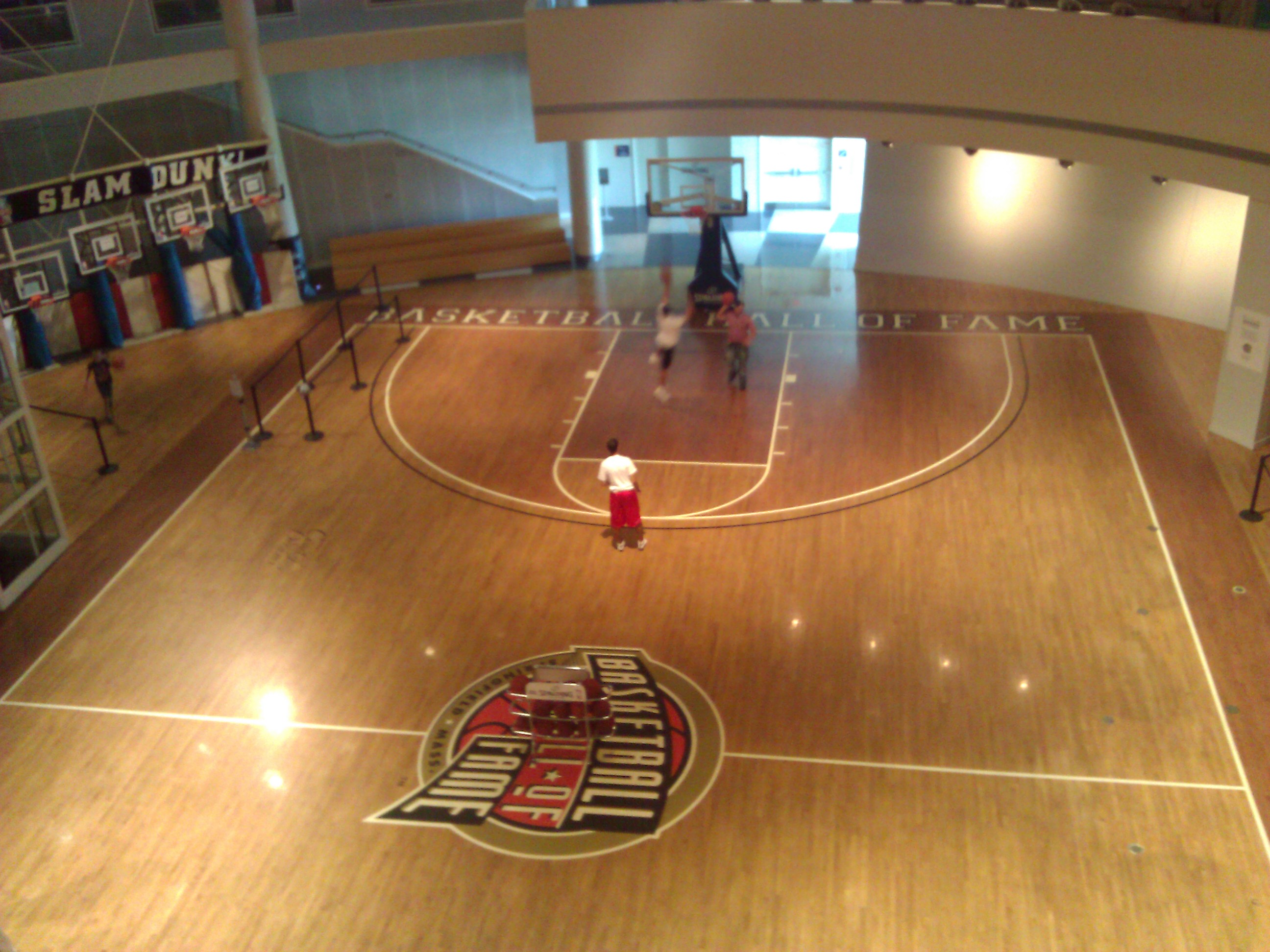
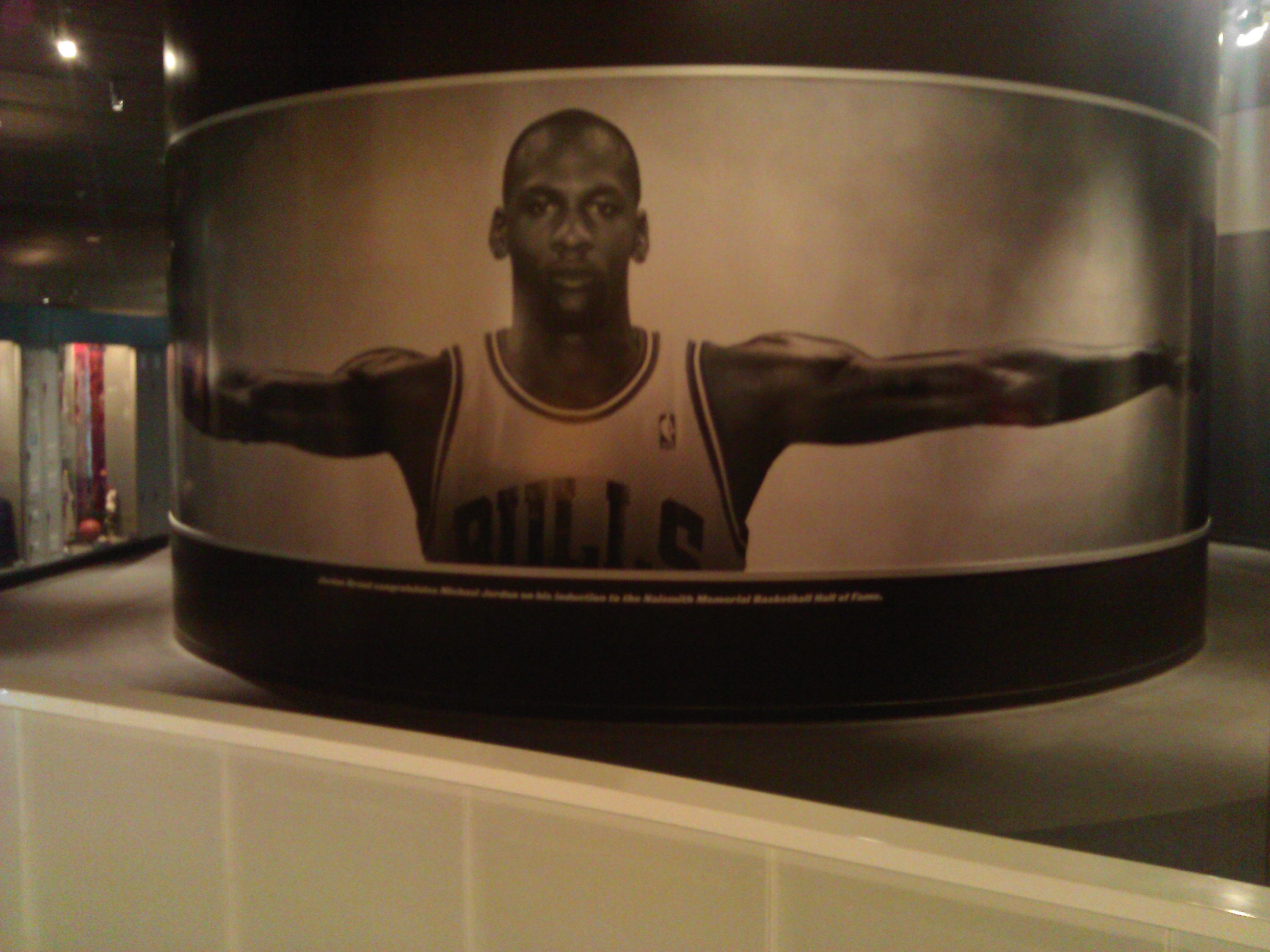
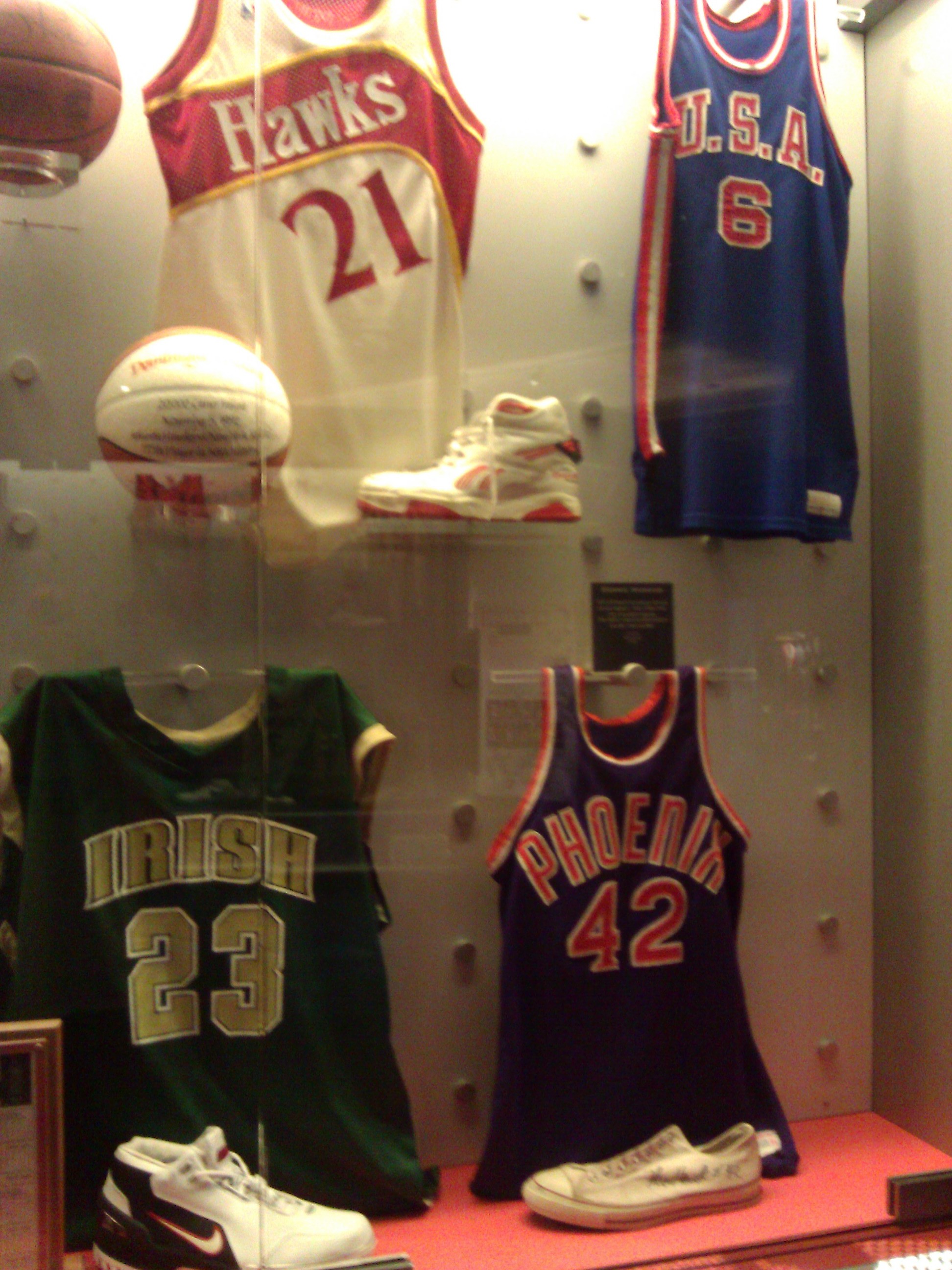
A week ago, I had the good fortune of passing through Springfield, Massachusetts and stopping off at the Basketball Hall of Fame where I spent a couple hours acting like a kid in an interactive Toys’ R’ Us museum. I gawked and stared at the memorabilia and basked (no joke) in the memories the photos brought to mind. I took a picture of the player photos that surround the interior dome of the BHoF and sent it to my basketball-loving amigos and in the same manner I was drawn to the game back in the late 80s, the focus orbited around Michael Jordan.
MJ at the Center
On the ground floor of the BHoF is a full court with baskets at each end, a couple ball racks with an assortment of basketballs available for the old and young alike to shoot hoops to their hearts’ content. Most people start the journey at the top floor and work their way down to the court and of course the gift shop. On each level as I worked my way down, I saw males of varying skill levels shooting around on these hoops. Some enjoyed the monasterial qualities of the setting while others seemed oblivious to their surroundings and shot with a freedom of awareness. And the reason I specifically call out males is because I didn’t see a single woman nor girl shooting on this day which isn’t meant as a commentary on the gender ceiling of the sport as women’s photos lined the dome above. Of course I arrived at the ground floor and while my wife sat on the bleachers with other wives, girlfriends and parents, I peacefully shot jumpers—in jeans and flip flops. Just like any other court I’ve ever been on where multiple people are shooting, there was an understanding, a common courtesy that you’d grab a stray ball for another shooter if it came your way and they’d do the same for you. This pre-knowledge automatically creates an unspoken agreement between people shooting around. So without even knowing the guys I was shooting with, I already had a relationship of sorts. And it was a peaceful shoot around even though I was admonished by one of the Hall’s employees for stepping to the half-court line and taking a few dribbles in preparation of a half court heave, “No half-court shots!” he shouted from the sideline. I laughed a bit realizing that I’m a 31-year-old man who was about to fire up a half-court shot at the BHoF. If that’s not enough evidence that basketball and the BHoF specifically can bring the little boy out of the grown man, then this exchange I witnessed as I was walking off the court should do the job: A man in his late 20s or early 30s was enthusiastically chucking up jumpers. Like me, he wasn’t wearing something like jeans and a button down and as I passed, I heard a woman standing near him (she was clearly his significant other) say in jokingly motherly tone, “OK, one more shot and then we’re leaving.” But he wasn’t ready to go, because we never are.
The Court from above
Here I am now, just over a week later watching a recording of the BHoF speeches from a few days ago. Reggie Miller’s speaking and referencing inside jokes that I kind of get. He calls Magic “Buck” and jabs him in the ribs about teaching him how to “lie and cheat” (at which point my thoughts uncomfortably jump to Magic’s legendary promiscuity that led to HIV)—that’s the backhand; the compliment comes when he articulates that lying and cheating are actually virtues of a “win by any means necessary” attitude. We get it because we’re on the inside and have read or heard about Magic’s compulsive competiveness in books and interviews, blogs and podcasts. Reggie gave a genuine, if not brotherly, credit to his sister Cheryl for raising the level of his family’s name and his basketball game. For the basketballiteratti, we already knew this and can judge and assess whether or not Reggie or Cheryl was the more relevant or greater Miller. We’ve heard the famous story about Reggie coming home from a high school game, pumped up because he scored 30 or 40 points and then he asked Cheryl how her game went and she’s all modest, “I scored 105 points.” We’re in the interpretive inner-circle; we know and nod or shake our heads.
And so many of these feelings of inclusion, of being a part of the inside joke or reference, were on display at the BHoF. I walked through the halls of the hall with my wife and pointed out random facts, stats and moments. I showed off out of childish enthusiasm: This is my area of expertise, this is what I know. Watching this induction ceremony with a sense of the physical space and history binds me into the knots of the game that continues to give and teach me so much. As I consider the infinite reach of basketball, I connect the aforementioned history to weekly pickup games with co-workers at Denny Park in Seattle where the quality of play falls in the bottom 50% globally (that’s not a good thing); I play with fellow cubicle dwellers shooting 35% from the field and averaging something like 13 turnovers per-36 minutes. We blame the shabby performances on things like age, ethnic and genetic athletic limitations and of course those impossibly sturdy symbols of American industry: The Double Rim. But excuses aside, we play and participate in a massive global community that was celebrated in Springfield, Massachusetts less than a week ago. We celebrate our physical possibilities, not our limitations, through our participation in this great, Naismith-given game. Our games at Denny Park on Fridays are tiny threads in the fabric of global basketball and at some level come with an awareness in all of us of the history that inspired and motivated us to step onto the court in the first place and continues to do so, week after week, year after year, in Seattle, Springfield and all points in between.
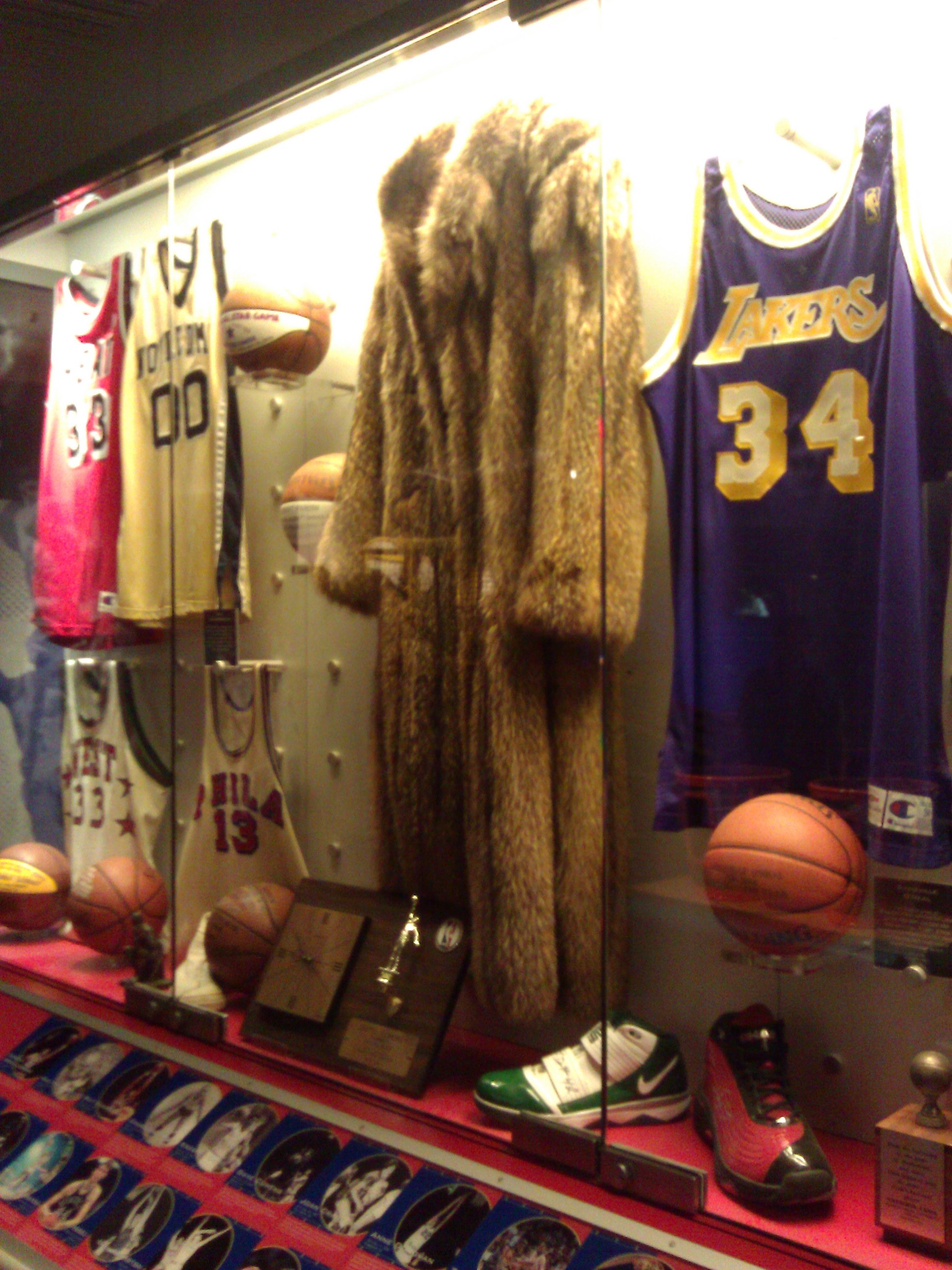
Dan Issel Nuggets uni; it’s old, it’s heavy. You could wear those warmups in freezing temps and be comfy.
The saga, the nightmare, the Dwightmare, the annoying story that mercilessly dominated NBA headlines for over a year, the Jason Voorhees of NBA rumors … it’s finally over; for now at least. The deal was consummated a week ago. Dwight Howard ends up in Los Angeles, Andre Iguodala in Denver, Andrew Bynum in Philly and Orlando gets a whole lot of spokes, but no axels. Us? We get much-deserved respite.
But all this hype and distraction got me wondering: How did we get here? And to answer that question, I went back to Wednesday, June 26th, 1996. I was nothing but 15-years-old, likely surviving a hot Midwest summer in Des Moines. Impossible-to-predict twists and decisions led me from that summer day to a couch in Seattle where I sit writing this now. Equally strange turns have led to the Lakers building a squad that on June 26th, 1996 was impossible to imagine:
Kobe Bryant: After witnessing Kobe chew up Laker vets Michael Cooper and Larry Drew, Lakers GM Jerry West went all in (by “all in,” I’m referring to his effort not Vlade Divac; who he traded to get Kobe’s rights) to get the young Jedi master. The rest is basketball history. Like any 16-year relationship, there have been bumps along the road and breakup talk (do you even love me anymore?), but even if the spark burned out long ago, the marriage still makes too much sense. And so it is that Kobe has spent the duration of his 16 years with the same team and the majority of that time as the face of franchise. His journey to the current incarnation of the Lakers is less interesting than the rest of his teammates. The most interesting aspect of Kobe-to-the-Lakers is how agent Arn Tellem and Jerry West strong-armed the rest of the league out of drafting him—looking at you John Calipari.
Steve Nash: Two picks after Charlotte scooped up Kobe for Los Angeles, the Suns drafted a Canadian point guard who developed a knack for clutch play at Santa Clara University. The rookie Nash was not the swashbuckling, age-defying Canadian icon we know him as today. It took him several years, a visionary coach and a return to his second home in Phoenix to become the Nash so many people have fallen in love with: shaggy-haired, fearless competitor, ultimate giver and sympathetic superstar. Whether it’s the media, his opponents or fans, it seems like we all love Steve Nash. His resistance to bailing from a fading Suns franchise did nothing but endear him to us: “He’s so loyal!” Nash is no Jesus, but if he turned water to wine, I think people would just look at each other and say things like, “Well, it is Steve Nash,” then nod and move on to Anderson Cooper and dinner plans. Religious comparisons aside; after the Lakers-Suns battles of yore, the Lakers seem like the last team Nash would want anything to do with. But then, like thieves in the night, the Lakers, Suns owner Robert Sarver and Nash himself came to an agreement that had something to do with family and the pursuit of immortality. I don’t know if oaths were made or signatures signed in blood, but all of a sudden the two most-decorated members from the decorated class of ’96 were teaming up for what appears to be a final run at glory (potential book title there).
Dwight Howard: This guy. I’ve always had personal issues with how Dwight handles himself and it’s obvious that it’s my issue and not his. But this giant goofball, this part-time impersonator, this wannabe Shaq, this bane of Twitter’s existence somehow ended up on the Lakers last week. Dwight was just ten-years-old when Kobe joined the Lakers; a burgeoning athlete, he was just starting out on a path that would lead to him joining forces with Kobe and Steve Nash 16 years later. In the interim, he’s grown from that little boy with hoop dreams to a massive physical specimen; capable of lifting cars, dunking on 12-foot-hoops and a potpourri of other feats of athleticism and strength. When he finally became the Dwight we know today (this occurred at some point during his stay in Orlando), he revealed himself to be a playful joker who craves attention and pleasing people around him. This might be speculation, but over the past year where’s continually elbowed and sound-bit his way into the spotlight, we’ve learned a lot about the NBA’s best big man and it’s not all good. He made it clear he didn’t want to be in Orlando, then rescinded and professed loyalty, then demanded departure again. His love-affair with Brooklyn bordered on juvenile (“It’s my Brooklyn and I want it now!”) and exposed Dwight’s inability to understand NBA salary cap rules. It was always Brooklyn or bust for the big man and now that he’s landed on bust, it’ll be interesting to see how he settles in to his new town with his new friends. Kobe and Nash are a long way from Jameer Nelson and Jason Richardson.
Antawn Jamison: Oh sweet Antawn. When I think about Antawn Jamison, I picture those thick eyebrows lying above dark focused eyes, a head that was made to be cleanly shaven and game that consists of equal parts talent and equal parts hard hat mentality. I recall his Tar Heel partnership with the young Vince Carter and how he came out of nowhere (although this is mostly impossible given that he was on UNC’s squad) and dominated the ACC when it was the best college basketball conference in the world. As a productive non-superstar, he’s enjoyed (hopefully) being a sought-after commodity—the last piece on teams looking to get over the hump. And now he’s settling into what could be the final act of his oak solid career as the 6th Man on the Los Angeles Lakers. Back in ’96 when Kobe and Nash were being drafted, it was obvious he would end up in the league one day; it’s just tough to have envisioned him in this role at this time with these guys.
Metta World Peace, aka Ron Artest: Ron Ron was just 16-years-old when Kobe arrived in Lakerland. Based on the interviews he’s given and the backstory we know, he was conceivably roaming around Queensbridge ducking and dodging the scenes straight out of Mobb Deep and Nas. He made it out though and has had the most colorful voyage of all the current Lakers: Name changes, suspensions, therapists, elbows, brawls, rap albums and so much more shit that most of us probably can’t digest. That MWP made it to the Lakers actually seems more like a foot note than its own chapter in what’s just another pit stop on the unorthodox road of his biography.
Pau Gasol: Kobe’s longest-standing sidekick (unless you consider Mitch Kupchak as a Kobe-sidekick); Pau has been something of a whipping boy since he arrived in Los Angeles back in 2008. Whether it was KG and Perkins in the Finals or Kobe’s overused ice cold stares of disgust after Gasol failed (yet again!) to read Kobe’s mind; someone’s always got beef with Gasol’s heart and soul. It doesn’t matter that he was traded for his brother and a future murderer (allegedly). What matters is that Gasol is, and always has been, underappreciated. His name was kicked around in trade rumors like a deflated soccer ball and he was even traded to Houston in that bizarre Chris Paul deal (we still remember, Stern). But now that Bynum’s gone, it looks like Gasol can finally get the restful sleep and peaceful life he deserves.
I’ve always thought it begins and ends with Kobe, but Dwight changes all that. The future only ends darkly and you have to wonder how smoothly any Dwight Howard ascendance happens. Will Kobe pass the torch along with a smile and a sixth ring or will a triumvirate of Jim Buss, Mike Brown and Dwight pry it out of his arthritic fingers while simultaneously kicking him to foreign shores to wrap up his basketballing career? Or will the misery of all miseries come crashing down around us in waves of Dwight Howard free agent rumors? Pray for us all …
Alright, today’s post is a consolidation of madnesses from Sunday and Monday; and make no mistake it has been mad; at least someone’s mad. We’ve witnessed referee’s being loosely assaulted, Caron Butler breaking his hand, an impossible 27-point comeback and Amar’s Stoudemire punching out a pane of glass and in the process shredding his hand. If you’re not getting kicked out of games or getting hurt, you’re not doing your part.
Utah at San Antonio, game one, Spurs won 106-91, lead 1-0: Tony Parker did that Tony Parker thing he does where he uses speed and timing to invade the opposition’s defense at will. That the Spurs now play to his strengths instead of Duncan’s is impressive and a credit to all parties involved. The Jazz took one of four games against the Spurs in the regular season and will be fortunate to do better in the playoffs.
Random fact: Gordon Hayward attempted a career-high twelve free throws in game one and hit all twelve.
Denver at Lakers, game one, Lakers won 103-88, lead 1-0: Andrew Bynum is big, tall, long, talented, occasionally immature and more. To the Nuggets, he was the boogeyman in the paint, a giant protecting his lair. Ten blocks in the playoffs? Tied Hakeem Olajuwon and Mark Eaton for most blocks in playoff game history? Yep, that’s Andy. While Dwight’s temporarily crippled by a herniated disc, Bynum looks like an invincible force doing battle with children.
Boston at Atlanta, game one, Hawks won 83-74, lead 1-0: It was yet another battle in years’ worth of battles for these two franchises. The Hawks overcame a historically dismal shooting performance from Joe Johnson (see random fact below) to control this game and hang on for the win. The story that ruled the day was Rajon Rondo’s little chest bump into the ref. The timing and reaction were both overboard and could result in Boston dropping into a 0-2 hole. With Ray Allen’s health in question, the momentum Boston had built in March and April is vanishing in acts of immaturity and inevitability.
Random fact: Joe Johnson joined three other players in playoff history in three-point shooting ignominy with his 0-9 performance. His fellow culprits: John Starks, Rashard Lewis and Derrick Rose.
Clippers at Memphis, game one, Clippers won 99-98, lead 1-0: Watching this game was like watching a movie where you expect one thing to happen, but then the director/writer throws a knuckleball that leaves you disoriented and questioning the events of the previous two hours. Did it add up? Was it believable? Did I enjoy being befuddled or did the director just play a joke on me? There wasn’t a script to Sunday night’s game unless the big director in the sky is a Nick Young fan. What happens from here is anyone’s guess, but I can confidently say the Memphis Collective (players, coaches, fans, employees) looked helplessly nauseous in that fourth quarter.
Random fact(s): Reggie Evans’s 13 rebounds in 21 minutes put him in rare company with five other prolific playoff rebounders who’ve grabbed at least 13 boards in 21 minutes or less: Danny Schayes (14 in 21), Kurt Rambis (14 in 21), Scot Pollard (14 in 21), Jeff Foster (13 in 21), Maurice Lucas (14 in 19).
New York at Miami, game two, Heat won 104-94, lead 2-0: Once again, anger steals the headlines. Amar’e Stoudemire didn’t take too well to the Knicks’ second straight loss in Miami and took it out on a pane of glass covering a fire extinguisher. David Aldridge proceeded to take the event far too seriously, treating it more like Stoudemire had severed his femoral artery and was at risk of bleeding out instead of addressing it for the loss of control that it was. All this really does it take away the focus from what was another strong Miami performance and further reinforced the fact that the Knicks are simply overmatched the way blind Chinese dissidents are powerless against their government … oh, wait.
Random fact: Miami Heat nicknames: Mike Miller is “Slim,” Juwan Howard is “Nooky,” James Jones is “Jhoops” (which is actually pronounced “Joops” as the “h” is silent)
Orlando at Indiana, game two, Pacers won 93-78, tied 1-1: This game is being relegated to the NBA TV slot which essentially makes it the least interesting series in the playoffs. Ratings considerations aside, Monday night’s game was the familiar storyline of a tale of two halves. After falling behind by two at the half and being firmly bullied, the Pacers responded appropriately with a 30-13 third quarter. I wish things were different, but I struggle to find intrigue in this series.
Random fact: The Pacers are 33-2 on the season when leading after three quarters.
Dallas at OKC, game two, OKC won 102-99, up 2-0: Combined score after two games 201 – 197. The Mavs have had their chances, but unlike last season when they couldn’t miss in crunch time, Dirk and Jason Terry have come up short two games in a row and are dangerously close to seeing their title defense end early. Being pushed to the brink is nothing new for this Dallas crew, but in small spaces of their group consciousness, questions are being asked. Notable observations:
I’m not a Brendan Haywood fan, but the more I see him, the more I feel Shaq was justified in referring to him as “Brenda.”
Does Billy Hunter watch NBA games and if so, does he openly cheer against Derek Fisher? If the answer to either of those questions is yes, last night had to be particularly bitter for him.
Random fact: Miniscule sample size for sure, but through two playoff games, Kevin Durant is shooting 34% from the field compared to 52% for Russell Westbrook.
And that concludes three days of playoff basketball. We’ve had anger, controversy, pain and loss. Negativity is the overwhelming theme and I look forward to exploring the more affirmative aspects of these games in the coming days.
It didn’t take long for the big red balloon of optimism to pop over the city of Chicago and rain down tears in the shapes of dripping red-hued question marks. All the finger pointing in the world (at Thibodeau, at the shortened season, at Derrick’s delicate 2012 body) won’t put Derrick’s ACL back together again, so let’s march on for a quick review of Saturday’s agonies and ecstasies:
Philly at Chicago, game one: The Bulls were their controlled, dominant selves with Rip Hamilton flashing and dashing off baseline screens and running Philly defenders ragged like it was 2004 all over again. If the Bulls, sans Rose, can somehow continue to score close to 100 points, this series won’t last long. They know how to behave with C.J. Watson at the helm and will continue to execute Thibodeau’s air tight game plans, but can Doug Collins’s squad find a way to step up their defense and put points on the board against a stubborn Bulls team? I don’t know, but I’m guessing Lavoy Allen is not the answer.
Random fact: Chicago was 22-0 when scoring 100 points or more this season.
New York at Miami, game one: 100 to 67? So much for the hype machine, Melo vs. Bron, Amar’e vs. Bosh, Shumpert vs. Wade (?) and New York’s three-point bombing bench. This was supposed to be the matchup we were all slobbering over, but instead game one had that dreamlike falling feeling, but we never woke up; or at least the Knicks didn’t wake up. Since no one really knows who the Knicks are (Knicks included), it’s impossible to imagine what we’ll get in the next three to six games, but my buddy Bug made a great, although mostly unrelated, point: Miami with Tyson Chandler instead of Chris Bosh would be a nightmare.
Random fact: Miami finished the regular season 18-0 when shooting over 50% as a team. Translation: LeBron and Dwyane: Don’t give into temptation, avoid the three.
Tragic ending: To Iman Shumpert’s season. Like Rose an hour or so before, the rookie who’d been somewhat prematurely anointed as one of the league’s top perimeter defenders (already?) tore his ACL as well.
Orlando at Indiana, game one: Here’s another one I caught on the highlight reel. The stories of this game: Danny Granger wet the bed, Roy Hibbert blocked nine shots (life’s a lot simpler when you get Big Baby instead of Dwight Howard) and Stan Van Gundy continues to build support in the ongoing Dwight vs. Stan feud.
Random fact: The Magic is 10-1 all-time when winning game one of a series.
Dallas at OKC, game one: The legend of Kevin Durant continues to grow. He got a true shooter’s bounce to win the game for OKC and send the bench and hometown fans in euphoria. Even though some of the names and faces have changed and James Harden’s beard takes up a little more mass, it felt like carryover from last year’s Western Conference Finals—minus Dirk being perpetually en fuego.
Rejected!: OKC led the league in blocks per game and their 8.2bpg is the fifth most per-game total in league history. They tallied eleven blocks on Saturday.
Sunday’s games added more piss and vinegar to the mix (we see you, Rajon). I’ll be back here tomorrow with another recap. And in the meantime, leave us all to ponder if anyone plays with a Marc Gasolian zeal for the game. It’s like he took all that energy his brother has channeled into primordial roars and re-directed it to positivity and an acknowledgement that he’s paid to play basketball for a living.
It’s been a short, compact, but winding road to finally arrive at the end of this 66-game battle of attrition. We’ve seen cornballs, meatballs, basketballs, big men in nerdy Lewis Skolnick glasses. We’ve seen a return to the gates of paradise for the league’s old guard. Kobe Bryant, Timmy D, KG, Paul Pierce and Steve Nash have applied stiff arms to father time. Thanks to some clumsy statements and an inability to wipe that shit eating grin off his face, Dwight Howard is now competing with LeBron for the league’s least likable superstar. Speaking of Dwight, the league’s two best bigs have revealed themselves as entitled brats (Andrew Bynum being the second) and Blake Griffin has come to embody a kind of dickhead we all encounter somewhere in life’s journeys…all in 66 games.
I’m a man and feel emotions like men do. And anger and frustration are emotions I feel. A part of me relishes pointing the accusatory, judgmental finger at an egotist like Dwight or bullies like Blake and Bynum. They’re easy targets who paint big ol’ bulls-eyes on their backs and fronts with their sullen, selfish behaviors. So if I venture away from a celebratory tone, just know it’s because I’m a whole human who cries sometimes when I wish I could laugh.
Today’s post is a pointless journey over the past four months of NBA madness. There have been so many details and tidbits overlooked in post-game write-ups and hometown blogs that it’s impossible to catalog them all here without some kind of web-scraping tool that understands context and the use of irony in the English language. I’m not going for comprehensive, just memories and impressions and sore thumbs—because we all know they stick out so much.
Taking Pleasure in Someone Else’s Failure: The Los Angeles Clippers: You can’t call it a failure considering they’ll likely end up with the four seed in the west and have one of the most entertaining one-two punches in recent memory, but with the emergence of Bynum and Kobe thriving off will, muscle memory and craftiness, the Lakers are still the big brother. Cool out, Lob City, or whatever you’re calling yourselves. And for God’s sake, someone (I vote Reggie Evans and Kenyon Martin) put a ball-gag in Mo Williams’s mouth when reporters come around.
Jekyll & Hyde honor for an inability to grasp a singular identity: The New York Knicks: It’s the Melo and Amare show with Tyson Chandler’s championship mentality anchoring the defense. No, no, it’s Jeremy Lin and role players pick and rolling the opposition to death. Err, let’s dump D’Antoni and hand the reigns over to Melo and Mike Woodson. All that in just 66 games. Imagine what Dolan and company could’ve done in a full season.
The John Edwards Memorial: Billy Hunter and Derek Fisher: Speaking of two faces, it’s no wonder the labor negotiations dragged out so long with these two feuding like basketball Hatfield and McCoys—complete with Hunter’s entire family being on the NBPA’s payroll in one form or another. Given that we went from an independent audit of the union’s books (ie; Billy Hunter) at Fisher’s request to an 8-0 vote by the union’s executive committee for Fisher to step down, it feels like Hunter’s pulling strings with his pinky rings. I wouldn’t be surprised if News Corp is somehow involved in all of this.
So So Bad Michael Jordan All-Stars: The Charlotte Bobcats: Everyone’s getting their licks in on MJ these days and why not? The go-for-the-jugular mentality that suited him so well on the court has made a jackass out of him as an owner and in the front office. After hearing MJ’s role as one of the vocal small market owners hoping to crush players in labor negotiations, it’s depressingly satisfying to see a team he helped craft struggle like this. And I got money that Paul Silas would hand it to Tyrus Thomas.
Don’t Worry, it’s just Karma: The Portland Trailblazers: I know business is business and from everything I’ve read, Darius Miles was somewhat difficult (understatement) during his tenure in the City of Roses, but I can’t ever forget the Blazers attempting to cash in on his knee injury and force him into an early retirement. Were these the same doctors who gave Greg Oden a once over before the draft? Or perhaps the same front office that knew Roy had a degenerative knee condition and still gave him an extended contract? Reducing it all to something as man-made as “bad luck” seems too simplistic.
We were wrong about you, but we’re still not sorry: David Kahn: Before MJ pulled a kamikaze move as the pilot of the Bobcats, we told jokes about Kahn’s ineptitude and laughed at the punch lines with Chris Webber and all felt like insiders. These days, Kahn is adored in Minneapolis the way Kim Jong Il was adored in Pyongyang…and Minny didn’t even make the playoffs. The bar has officially been lowered.
Who is he and what is he to you?: Terrence Williams: A first round pick by the Nets in 2009, T-Will has played on three teams in three seasons, seen at least one stint in the D-League, ended up in at least two coach’s doghouses and yet still possesses one of the most versatile games in the NBA—at 24-years-old. He must be pissing someone (or everyone) off, but we never get straight dope on the guy. Since I’ve been advocating his game since his Louisville days, I feel obligated to stand by my assessment that Terrence can ball. And ball he does! Since the Kings picked him up after Houston dumped him, I’ve caught a few of his performances and on several occasions he’s been the best player on the floor. He can shoot, run the offense as a 6’6” (might be an inch smaller) point guard, beat bigger defenders off the dribble and beat smaller guys on the boards. Is he Terrence the Terrible or just a baby Bron?
I’ll put trademarks around your fuckin’ eyes: The League: Maybe it was the funky schedule, missed paychecks or injuries, but something felt a little edgier this season. After all the cool kids and super friends BS and the clamoring of every former player that the league’s gone soft, the players developed a bit more animosity towards each other this year. It’s not quite McHale on Rambis (which, if it happened today would be panned by the same ex-players as a dirty play), but the Clips-Lakers, Lakers-Mavs, Heat-Bulls, Celtics-Heat, Bulls-Pacers have all displayed a genuine dislike for each other and if the popularity of the MMA or the NFL is any example, we should all be pleased by this extra aggression.
Billy, listen to me: White men can’t jump:Kevin Love: Is it possible to discuss American-born white NBA players without race coming up? It is, but I wanted to get that White Men Can’t Jump reference in so we’re going there. And while the myth has been debunked by Bones Barry and a slew of other white guys with hops, by and large, white guys aren’t getting off the ground with the same spring as their black counterparts and Kevin Love is no exception. He’s the best non-vertical rebounder since Danny Fortson’s six-game stretch with Golden State in 2000 when he was snagging 16+ rebounds/game. But that’s where the Love-Fortson comparison ends. Kevin Love is the best power forward in the league. Danny Fortson was just the best Danny Fortson in the league.
Good Guys Wear Black: The San Antonio Spurs: This group of the Spurs has been around so long that they’ve earned the begrudging respect of fans who know Tim Duncan from his Wake Forest days. From slow, plodding, “right” basketball to an intelligent, opportunistic transition game, they’ve been revamped and apparently I can’t stop writing about a team I loathed as recently as three or four years ago. Hate if you must, but just know it’s misplaced.
Old School Jams: 1996 NBA Draft: What if we sat down over peanut butter and bananas on toast the morning after the 1996 draft and broke it down player-by-player and I told you with a straight face that by 2012 Allen Iverson would be broke and blackballed by the league, Stephon Marbury would be king of the Chinese pro league, Ray Allen would be the greatest three-point shooter in league history, that preps-to-pros punk who speaks Italian would be a five-time champ and one of the toughest and most prolific scorers in league history, Steve Nash would still be plugging away as a two-time MVP (as many as Kobe and Iverson combined, say word?) and one of the top PGs in the league—at 38-years-old?
Factoids, anecdotes and achievements have bounced across the ticker and Twitterverse for the past four months like an endless rack of basketballs kicked across the gym floor; something of value to be found in each bounce of each ball if only to the crazy hardcore and mildly addicted. After all, it’s just basketball, but here we are …
Sometimes we go through hiatuses and require a divine intervention, an intoxicating muse or maybe just a bizarre stat to snap us out of our doldrums.
So it was tonight when I was looking at the box score from the Mavs-Jazz game which ended in triple overtime with the Jazz getting a huge 123-121 win. Six players played over 50 minutes, the teams combined for 62 free throw attempts, five players scored over 20, Al Jefferson had 28 points and 26 rebounds, Dirk put up 40. The game was stuffed with numbers of all kinds, but what stood out the most was a pair of zeros side-by-side, attention grabbing emptiness: In 54 minutes and 4 seconds of play, Al Jefferson attempted zero free throws.
This is a man who grabbed five offensive rebounds and took nine shots in the paint. He spent time most contentious area of the court, but didn’t get to the line once. In all fairness, no one fouled out this. It wasn’t a foul fest or a game won or lost in the trenches. In terms of free throws attempted, the 62 combined free throw attempts were just a few more than the league’s FTA average per minute.
But the 0-0 in 54 minutes made me wonder who, if anyone had ever endured this kind of FTA allergy. And so I took a look at basketball-reference’s player game finder (dating back to 1985-86) and came up with the following, not-so-coveted list:
I know Ricky Rubio will come back to us in six to nine months like most victims of torn ACLs do, but it doesn’t ease the pain, the sense that we’re all being deprived of something or someone with rare abilities. Ricky Rubio is that someone and it sucks that he’s gone too soon, but when we get out of bed in the early morning hours and walk out the door, we put ourselves at grave risk every single day. Ricky was doing what he what loved when he tore the aforementioned ACL…just like so many blessed basketball players before him—and my fiancée when she tore her ACL on a trampoline last year.
So instead of sitting in a windowless room with the light of a single candle burning while Michael Jackson’s “Gone to Soon” fills the silence and I swallow Xanax to calm my worried mind, I decided to get tough and force myself to see a bright side of this situation. The truth is there is no bright side to Rubio tearing his ACL.
Oh, brother.
But there are other truths. Like this one: Today’s NBA is cram packed with men of average-to-just-above-average height (worth noting that the point guard position, based on the physical pre-requisites of the position, has a larger pool of humans to select from than all other positions combined) who play the point guard position extremely well. For my buck, none of them have that je ne se quoi that Rubio possesses, but what they may lack in some poetic Spanish essence, they make up for in burst and tenacity, abruptness and precision. As much as I want to stack rank these players (it feels so damn natural), I realize that rankings obfuscate the point and result in arguing and debates that have nothing to do with this celebratory acknowledgement that I wish Walt Whitman and Curtis Mayfield could collaborate on instead.
We’re in the midst of a point guard boon and even with the loss of one of its most joyfully entertaining members (it’s temporary!); it remains a group bound together by ability and time. To investigate the “why now?” is to embark on a Freakonomics journey that I’m not presently being paid enough to embark on. In place of said investigation, I’ve included an homage to the shabooya roll call, giving out respect and love to the architects who laid the blueprints for this position and the torch bearers who continue to shed light on its borders:
Bob Cousy: One handed, but he greased the wheels of the most successful machine we’ve seen.
Oscar Robertson: Elgin Baylor at the point. The Big O would’ve been big for a PG in today’s game. In the 1960s, he was pretty much a predecessor to LeBron.
Isiah Thomas: Lord lord lord, the original baby faced assassin. I hated his guts, but Zeke was the last great point guard (Rondo?) to lead his team to a title … 20+ years ago.
Unseen 80s buddy flick: Zeke and Billy's Wacky Summer
Magic Johnson: The greatest nickname for the greatest point guard of all time.
John Stockton: Slow and steady wins the race. Watching Stockton and hearing stories about him, you get the feeling he has a cockroach-like ability to survive any situation. If and when the nuclear holocaust happens, Stockton will be one of the few to survive and re-build our civilization.
Tim Hardaway: It was all about the UTEP Two-Step, but little Timmy was a founding member of RUN-TMC and was one of the original jitterbug point guards. If Rubio needs inspiration during his recovery process, he need look no further than Timmy who tore his ACL and bounced back to become one of the most dynamic points of the 90s.
Jason Kidd: Cut from the Magic mold, Kidd could’ve retired five years ago and still made the Hall on his first ballot. Still ticking away and winning a title in his late 30s, he makes me wonder what Magic could’ve accomplished if he hadn’t retired prematurely at 31—I’m 31 and I know I’ve still got some good hoops left in me.
Nate Archibald: I don’t know much about Nate except he preceded Hardaway at UTEP and led the league in scoring and assists. How you do that?
Steve Nash: When Nash was decked out in Santa Clara red, I never would’ve imagined he’d be a two-time MVP and retire as one of the greatest passers and consummate PGs in league history. Not knowing is what makes this game so lovable and addictive. Who’s going to fuck up your misguided misconceptions next?
Kevin Johnson: Fred Hoiberg’s already got the “Mayor” trademarked, but KJ acting as the savior for the NBA in Sacramento exceeds anything he accomplished in a Suns uniform… although Hakeem might disagree.
Mark Price: Bobby Cremins’s original point guard extraordinaire. Price has won free throw competitions in all 48 of the contiguous United States as well as Hawaii.
Stephon Marbury: Sticking with Georgia Tech, Marbury’s resume is debatable, but he was one of the original one and done players and is a poster child for the mid-90s malcontents. Hate if you must, but there’s a place in the point guard pantheon for Marbury; I just don’t know where it is.
Gary Payton: Yakety yak, Payton loved to talk smack. A 6’4” point with a post game, Payton is regarded with universal positivity. The northwest adores the man to this day and his NBA TV partnership with Chris Webber is as entertaining as his partnership with Shawn Kemp…albeit for completely different reasons.
Mark Jackson: It’s not fun to watch a man start backing another man down at the half court line, but Jackson made a career out of utilizing his superior size and apparent “old man” strength. The league changed the rules because of his constant abuse.
Chris Paul: In terms of pure point guard-ability, CP’s my preferred flavor for today’s game. He might be a dirty player, but he controls the timing and tempo of any game he’s in. The only drawback to his game is when he over point guards—that’s a term for point guards who are so insistent on getting teammates involved that they essentially remove themselves as scoring threats and allow the defense to play 5 on 4 basketball: *Over point guarding*.
Deron Williams: Hard to believe the Hawks passed (no pun) on Deron and CP3, but they did. Deron’s a fullback of a point guard at 6’3”, 200lbs+. He can score, pass, provide court generalship and plays Lex Luger to CP’s Ric Flair.
Rajon Rondo: People should be nicer to Rajon. He’s a point guard who can’t shoot worth a damn, but I don’t remember Mark Jackson or J-Kidd hitting too many jumpers either. Rondo’s an underappreciated innovator…with a ring.
Chauncey Billups: Is a he a Hall of Famer or isn’t he? Should he really be called “Mr. Big Shot?” These aren’t the questions to consider. Instead of questioning, let’s all appreciate Billups for being a power point guard whose value always exceeded the conventions of a box score.
In all seriousness.
Derrick Rose: An MVP at 22 and completely incorruptible by the LeBron-led “cool kids” clique. Rose is a point guard version of Kevin Durant—a young man wholly committed to the game of basketball. Let’s just hope his back is up for the task.
Russell Westbrook: The pressure he applies on the offensive end is unrelenting and suffocating. He plays point guard, but if he was two inches taller, he’d be a younger, more explosive D-Wade. As it stands, we’ll just have to accept him as the league’s most explosive point guard (sorry, Derrick).
Rod Strickland: He might have a serious problem with drinking and driving, but nonetheless Strick enjoyed a 16-year career as a pure point guard.
Kyrie Irving: His game doesn’t match his age at all and I’m probably the first who thinks someone should check his birth certificate, but my paranoia aside, Irving is taking the right steps towards a career of accomplishment and accolades. When you think Kyrie, think poise.
Mike Bibby: Maybe had the best mid-range game of any point guard here. And that’s all I’m going to say about that.
Dennis Johnson: He wasn’t the best passer on his own team and he left us far too soon, but DJ’s completion of “a steal by Bird!” is a signature moment of the 80s NBA.
Anfernee Hardaway: Injuries robbed Penny and robbed us of what appeared to be a HOF career in the making. What’s not to be won’t be and we’ll have to settle for memories of Butch McRae tossing lobs to Neon Boudeaux while Coach Pete Bell watches; anxiously waiting for the other foot to fall.
Ricky Rubio: It was love at first pass. I have a terrible memory, but like LeBron James’s debut several years ago, I can remember exactly where I was when I saw my first Rubio NBA highlights.
Baron Davis: When I was in college (early 2000s), I got in an argument with someone about the similarities between Baron’s game and Allen Iverson’s game. I disagreed Davis would ever be an Iversonian scorer then and I disagree now. Unfortunately, that’s my first thought when Baron’s name comes up. It’s not his fault, but he’s definitely to blame for regularly showing up out of shape.
Lenny Wilkens: I’ve only seen faded clips of Lenny playing ball, but his sideburns and coaching (most losses in NBA history) have embedded memories that can’t escape.
Doc Rivers: He’ll always been remembered more for coaching the Celtics to the title, but when I was six years old, Doc averaged a double double running point for the Hawks.
Mookie Blaylock: The original inspiration for Pearl Jam, M-m-m-m-m-m-Mookie played integral roles on mediocre teams. Does that make him mediocre? I say no.
No doubt, Omar picked up 3 assists on this one pass.
Omar Cook: Some people might scoff at Omar’s inclusion on this list, but just know that for the one year he played for St. Johns, Cook was a point guard prodigy who broke Mark Jackson’s single-game school assist record with 17—as a freshman. While I’m hesitant to question any of Cook’s decisions, he most likely could’ve benefited by staying at St. Johns for a few more years and fine-tuning his all-around game. Omar Cook, we won’t forget.
Walt Frazier: If you have League Pass or watch Knicks local broadcasts, then you’ve no doubt heard Clyde’s legendary vocabulary narrating their games. And then there’s his game seven Finals performance in 1970: 36 points, 19 assists and five steals.
Michael Adams: If a baseball player’s career stat-line followed the diminutive (5’10”) Michael Adams’s, someone would be pointing the accusatory PED finger at him, but since pro basketball players would never take PEDs, no one ever questions anything. Anyways, Adams was mostly known as a shoot first, shoot second, shoot third point guard with good, but far from great talents. He averaged 14.7ppg and 6.4apg for his career. And then there’s the blip on the radar that I remember all too well. In 1991, his 6th year in the league, Adams exploded (over 66 games) for 26.5ppg and 10.5apg.
Scott Skiles: 30 assists in a single game is good enough for me.
Derek Harper: Harper was his best playing alongside Rolando Blackman with the Mavs, but I remember him more for his redefined role as an enforcer of sorts on the 90s Knicks.
Norm Nixon: What do I know about Norm Nixon except he was pretty much forced out by Magic? Not too much.
Terry Porter: Porter was firing threes before it became the popular thing to do. He was never a speed/quickness-modeled point guard and I have my doubts that he’d be as successful in today’s game, but in the late 80s and early 90s, he was a key component of Rick Adelman’s Blazer squads.
Micheal Williams: Still holds the record for most consecutive free throws made at 97.
Micheal Ray Richardson: A victim of the 80s drug explosion. Everyone who saw him gushes about “Sugar,” but sadly isn’t that the case for most of the players who are either corrupted by drugs or tragedy? Despite my skepticism, there’s no arguing with Richardson’s stats: 15ppg, 2.6 steals/game, 7apg and 5.5rpg.
Brandon Jennings: The fact that Jennings probably isn’t a top-10 point guard is more reflective of the league’s depth at the position than it is an indictment of Jennings’s abilities. He’s Chris Rock skinny, but he’s got the stones of a leader.
Tony Parker: No one said you had to be a model citizen, friend or teammate to make the shabooya roll call for point guards and that’s a good thing for Parker. He’s been and done everything the Spurs ever asked from him and then some.
Fat Lever: One of the original triple double machines. Lever played for 80s version Mike D’Antoni in Denver’s Doug Moe and his stats reflect it. Over a four-year stretch in the late 80s, Lever put up 19ppg, 8.9rpg and 7.5apg.
Damon Stoudamire: Mighty Mouse won a rookie of the year award, shot over 3,000 threes and was pulled over with Rasheed Wallace for speeding and driving under the influence of reefer while driving from Seattle back to Portland after a game against the Sonics. Stoudamire’s also notable for statistically declining season over season as opposed to the natural bell curve we see with most players.
Kenny Anderson: Bobby Cremins strikes again. Kenny was a second overall pick and was supposed to be the next great NYC point guard. He never lived up to the lofty expectations, but he did marry Tami from the Real World.
Muggsy Bogues/Spud Webb: Both were great players who unfortunately can’t escape the association of being short men in a tall man’s game.
Nick Van Exel: My fond memories of Nick the Quick chucking ill-advised threes with that cock-eyed lefty release are accompanied by the hand-held Rodney King-quality video clip of Van Exel and some cronies of his stomping the shit out of some poor guy. Of course, I can’t find any reference to this on the internets, so I can only assume it’s a figment of my imagination (wink wink).
Ty Lawson/Jrue Holiday: A pair of speedy, talented, under-represented guys. Holiday and Lawson are perfect examples of the league’s depth at the position. They’re 21 (Holiday) and 24 (Lawson). The future is bright.
Andre Miller: The future might be bright for some, but we keep expecting the sun to start setting on others. Andre Miller refuses to recede into the horizon. He’s tough as pollution (ask Blake Griffin), knows his role and gets the job done every night. Is he underappreciated? Most likely, but even in his under-ratedness, he knows his role and plays it well.
John Wall: I feel bad for this kid who’s forced to play with mind benders like JaVale McGee, Andray Blatche, Nick Young and Jordan Crawford. Then I see him pull shit like that behind the back dunk he ripped off in the rookie/sophomore game and I’m like, “Hell no, I don’t feel bad for him.” I feel bad for us for not getting the chance to see what Wall’s all about. Until the Wizards finally bite the bullet and push the reset button all the way in, “How good is John Wall?” will continue to be asked on message boards and in cubicles.
Steve Francis: Is Steve Francis gay or isn’t he? I don’t think it matters, but typing his name into a search engine, the first few recommended searches include “Steve Francis gay.” Where does this it come from? I don’t have time to worry about it as I’ve already spent 2500+ words taking a trip down memory lane and present day boulevard to revisit point guards who have stepped on NBA courts in NBA jerseys over the past seven decades. Francis isn’t memorable because he was possibly gay. He’s memorable for doing things like driving for a game-winning dunk and disintegrating from NBA relevance overnight.
This was never meant to an all-encompassing list of NBA point guards (it was meant to be about Rubio), but rather players who, for one reason or another, stood out to me. If there was a question mark around a player’s position (Iverson, Jerry West, Steph Curry, the Jones boys from the Celtics), I left them off. Like Monica sang, “don’t take it personal.”
Tune in next week as I tie Hamed Haddadi and Omri Casspi into America’s foreign policy in the Middle East.
In a week when rumors ran rampant that the Celtics were “aggressively” looking to trade their enigmatically styled point guard, little Rajon Rondo responded by blowing the dust off his headband and putting Boston on his back in a Sunday matinee against the Knicks. Rondo went for 18 points, 17 rebounds and 20 assists in the overtime victory. That line is crazy even if came with a D’Antoni caveat.
To put Rondo’s statistical performance into context, I took a journey to Basketball-Reference.com’s Player Game Finder and found out that since 1985, only three other players have performed the improbable 3 x 15 (15 points, 15 rebounds, 15 assists in one game):
Rondo, more exclusive than secret societies.
**I didn’t see the tail end of ABC’s Knicks-Celtics broadcast today, so if they flashed some stat graphs referencing the numbers above, I can’t be accused of stat-jacking since I had no awareness of its existence.









 Dancing With Noah