Dancing With Noah

Just messing around, getting triple doubles

Tag Archives: NBA

Sunday to Monday Thoughts on Basketball

I’ve never had any regular segments on DWN and 2/3 of the way through the NBA season during a week when the crown jewel of NCAA basketball season kicks off is probably the worst time to try something new, but here we are with a weekly look at comings and goings, statistical achievements, half thoughts, observations, and an indication in written form that basketball is likely taking up a wee bit too much of my life.

  • Sunday night against the Celtics of Boston, 21-year-old wunderkind Anthony Davis put on a performance the likes of which hasn’t been seen since before he was born:
    • 40 points, 21 rebounds, 12-12 from the free throw line with three blocks
    • Individual career highs in points and rebounds
    • Youngest player since Shaq in 1993 to go for 40/20
    • Joined Larry Bird and Moses Malone as only players to go for 40/20 while shooting perfect from the free throw line
    • Cautionary note for all the teams striving to rebuild through a lottery pick: New Orleans had the fourth best odds to win the 2012 lottery and Anthony Davis.

anthony davis gamebook

  • Royce White was signed to a 10-day contract with the Kings on March 6th. The contract ended Sunday night which coincided with the end of Sacramento’s seven-game road trip. Over four games with the Kings’ D-League team, the Reno Bighorns, White played 25minutes/game, shot 37% from the field, and went for roughly 9pts, 4rebs and 3asts/game. With the Kings set to be home from March 17th thru March 27th, it’s fair to assume any audition with the big club is going to take place in the next week and a half. At this point, I get the feeling there’s general fatigue with White’s story/saga, but there’s still relevance to his story. ESPN’s Amin Alhassan had some insightful comments on the Kings plans with White.
    • Watching ESPN’s 30 for 30, Requiem for the Big East, I had no idea how good of a player Pearl Washington (Syracuse) was. He was before my time and since he didn’t have an impact as a pro, I never read up on his game. By all accounts here, he was a legend in New York before Syracuse and the game film shows a herky jerky, occasionally unstoppable guard that calls to mind another Pearl, that of Monroe – hence the nickname? Dude looks like he could dribble through a minefield, come out unscathed, then flip a little lay-in between the outstretched, broom wielding arms of Ewing, Mutombo, and Mourning. That he struggled as a pro doesn’t seem to impact how he’s remembered. Maybe it’s because I primarily follow the pro game, but it’d be cool if more players were remembered for their successes at any level than ripped apart for their failures or struggles.

  • Drew Gooden and Chris Andersen: Saturday night I was watching the Brooklyn/Washington game and saw Drew Gooden in a Wizards jersey with his head cleanly shaved, a headband on, no wild facial hair or ducktail. Just Drew, wearing #90, getting shit done. Before Washington signed him in late February, he hadn’t played an NBA game since April of last season with the Bucks and now, on Saturday night, he’s in the nation’s capital pumping mid-range jumpers, getting fourth quarter minutes, and generally contributing positivity to the Wiz. On Sunday, it was Chris Andersen giving Miami the same type of effort and energy that he’s been giving since they signed him to his first 10-day contract last January. The question I keep coming back to: How were these guys available? I get that players need to be able to blend in with existing philosophies and personalities and maybe other teams didn’t see the same opportunity, but it’s difficult to watch Birdman and Gooden thriving in supporting roles and wonder why it took so long for them to find employment. Then I wonder how many other potentially impactful players are out there waiting for a phone call.


By Month

GP

MIN

OR

DR

REB

Per36

October

1

37

2

11

13

12.6

November

15

35.8

2

4.3

5.8

5.8

December

16

36.3

1

5.1

6.4

6.3

January

14

35.1

1

5.9

7.3

7.5

February

12

35.8

1

4.9

5.7

5.7

March

8

38.3

3

11

13

12.5


But how? His career average is 4.8. His season average is 7.2, yet eight games into March and he’s rebounding like a French Dennis Rodman (sure, that’s excessive and a frightening amalgamation to boot, but you get me). Last he grabbed 14 more against Golden State.

  • The Spurs are on a 10-game win streak which has included wins against Dallas, Miami and Portland at home, and the Bulls on the road. Their next three games are on the road for a California swing against the Lakers, Kings, and Warriors. They were an impressive 38-15 before the break, but with a healthy post-All Star group, they’ve gone 13-1.


  • Writer Derek Bodner put things into perspective when he tweeted:  “The Seattle Seahawks have won more recently than the Philadelphia 76ers. We’re in mid-March. 20 in a row.” That was after Saturday night’s 26-point loss to Memphis which, as Derek points out, was Philly’s 20th straight loss. The margin of defeat over this terrible streak of failure has stretched from 5 points (Jazz) all the way on up to 45 points (Clips). The games aren’t even close and the schedule is not kind. Upcoming games: @ Indiana, Chicago, New York, @ Chicago, @ San Antonio, @ Houston, Detroit. Oh, it can get worse this deconstructed bunch. But save your pity for someone who’s trying.


  • Margin of victory is typically a good indicator of where a team falls in the league’s good-to-bad hierarchy. Unless you’re the Minnesota Timberwolves. Record-wise, the Wolves are the 16th best team in the league with a 33-32 record. Based on margin of victory, they’re 9th overall with a +3.6 which places them ahead of Dallas, Memphis, and Phoenix – three teams that enjoy a significant lead over Minnesota in the standings. You can look back through each year dating back to the 2001-02 season and you won’t find a team with a differential as high as Minnesota’s that missed the playoffs. There were only a handful of teams with a positive differential that managed to miss and none were near +3.6. Their 32 losses are by an average of ~8 points while 33 wins are by ~15 points. And in games decided by 5 points or less, they’re unbearably bad at 3-13.


  • Finally … Kyrie Irving may be out for the season with a biceps injury. If that’s the case, he’ll wrap up his 3rd season in the league having played in 174 of a possible 230 games – or roughly 75% of all possible games.

The Lost Years of Magic Johnson

You can lose all sorts of things. There’s Nas’s “Lost Tapes,” the Lost Boys and the Lost Boyz. People lose themselves, lose their keys, lose games. Lost lives, lost loves. You can lose anything tangible or intangible. Then there’s the four-plus seasons Magic Johnson lost to a lack of understanding around the human immunodeficiency virus (HIV). Losing a few seasons wasn’t life or death, it exceeded basketball in the sense that it challenged misconceptions around HIV/AIDS and continues to do so today – over 22 years later. When I write about “lost years” here, I’m referring specifically to an on-court context as Magic’s contracting HIV had a broader, further reach than anything he could’ve done a on basketball court. To that point, the power of Magic’s very public relationship with HIV has been covered more in depth and with more consideration than I can hope to, but what I remain curious about is what would’ve happened from 1991 to 1996 when a post-prime Magic still would’ve been gliding up the court, knees braced, fingers wrapped in tape, freezing indecisive defenders will telegenic lookaways, gold jersey with big purple 3-2 shadowed in white, pumping out stats so rare that he has no statistical comparison. What would’ve been?

It was last week I stumbled across a piece on Deadspin titled “The Beautiful Infographics of Ted Williams’s The Science of Hitting.” I emailed the story to a couple friends and we exchanged a few back and forths about Teddy Ballgame and the three seasons he lost in his prime to WWII service. Williams somehow won the Triple Crown both before and after his military sabbatical and, like Magic, doesn’t need any extra stats to pad his legendary résumé, but you still wonder about those three seasons and 450+ games he missed out on.

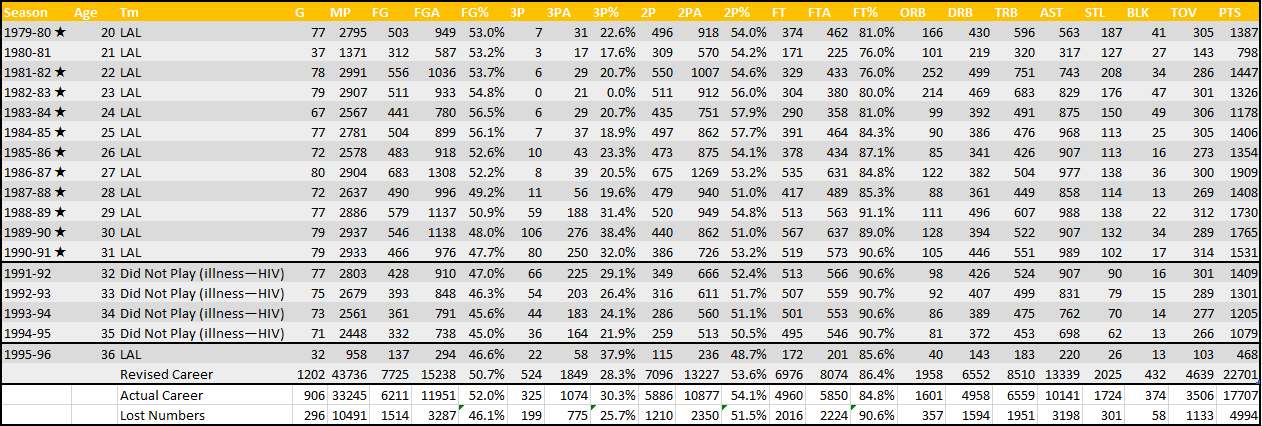
After referencing Magic in one of my email exchanges, I meandered over to Magic’s basketball-reference page and took a look at his outputs during his short return to the Lakers as a 36-year-old PF/PG: 14.6ppg, 5.7rpg and 6.9apg. The numbers on their own aren’t eye-poppingly revolutionary. 67 other times, NBA players have accomplished this line or better, but no player 36 or older has ever done it and no one else who’s posted these numbers did it while playing under 30-minutes/game like Magic did. It took most players at least 36-minutes/night to generate these well-balanced numbers.

I reached out to some of the stat guys at Hickory-High and chatted with Jacob Frankel about age-based regression statistics. Jacob explained to me that “players generally decline in everything except shooting and rebounding after 28,” but also cautioned that Magic might be a completely different animal. He offered to crunch the numbers for me using his own methodology and I was kind of excited when I heard back from Jacob a day later with the following: “I think Magic breaks the system … the system is based on similar players and Magic was so unique that it’s misfiring.”

I’m tempted to write something silly like “Magic breaks math,” but he’s just so much different from any other player that it’s difficult to systematically project his impact during those lost years. Where just a handful of players have been able to put up at least 14, 5 and 6.5 over the course of a season, Magic did it in every one of his 13 NBA seasons and the last one in 1995-96 was done after spending four full seasons away from the game and playing a career-low in minutes. His per-36 minutes that final season showed a slight decline against his career averages which is to be expected when comparing a 36-year-old with rust to a 31-year-old All-NBA first teamer who carried his team to the finals in 1991. Some other things to keep in mind: Magic split time between power forward and point guard on Del Harris’s 95-96 team. Despite playing in an unfamiliar position, he still exceeded his career average usage rate with 22.7%.

When I finally arrived at some oddball projections that wouldn’t pass muster in an elementary stats class, I found myself sort of empty. The numbers decline uniformly because my regressions are unimaginative, but the sum of what we missed out on amounts to a couple thousand rebounds, a few thousand more assists (he’d still be behind John Stockton), almost 5,000 points and a little over 10,000 more minutes. There would’ve been more memories and intrigues, battles with MJ and playoff triple doubles, but the extra codas these years would’ve added to his narrative are so significantly outweighed by his response to his own reality that I walk away from this piece with both a sense of failure at articulating any statistical intrigue and a greater sense of appreciation for the impact of the post-HIV Magic.   

 Magic

[POSTSCRIPT: It was eye-opening that as I sat down to write this, what is intentionally a piece focused on stats, I quickly became aware of how miniscule these thoughts are in relation to the impact of Magic’s announcement 22 years ago. What happened since then has been nothing short of world changing. In terms of bringing HIV/AIDS awareness to a mass audience and challenging stereotypes, Magic’s story is profoundly positive. In addition, his bottomless vaults of money and resources, his access to the best doctors and drugs, have cast a different-shaded light on what should be a problematic question of access and affordability of life-saving drugs. What I will continue to take away from Magic Johnson and HIV is that basketball created a platform with a massive, but relatively (on a global scale) limited audience. HIV offered a direct connection to millions of people in the same way cancer allowed Lance Armstrong to connect with people who never gave a damn about the Tour de France.

No matter how big they are, Magic’s trophy cases are overflowing with the awards and accomplishments from a life on the court. He’s on imaginary Mount Rushmores, is considered the greatest point guard to ever play the game, has the stats and hardware to back it all up. And no matter how great he was on the court, his impact off it has been infinitely more valuable to our species. Everything above, as curiosity-piquing as it may sometimes seem, is little droplets of salt water in the sprawling ocean of Magic’s life.]

NBA Biographical Sketch #9: Malik Sealy

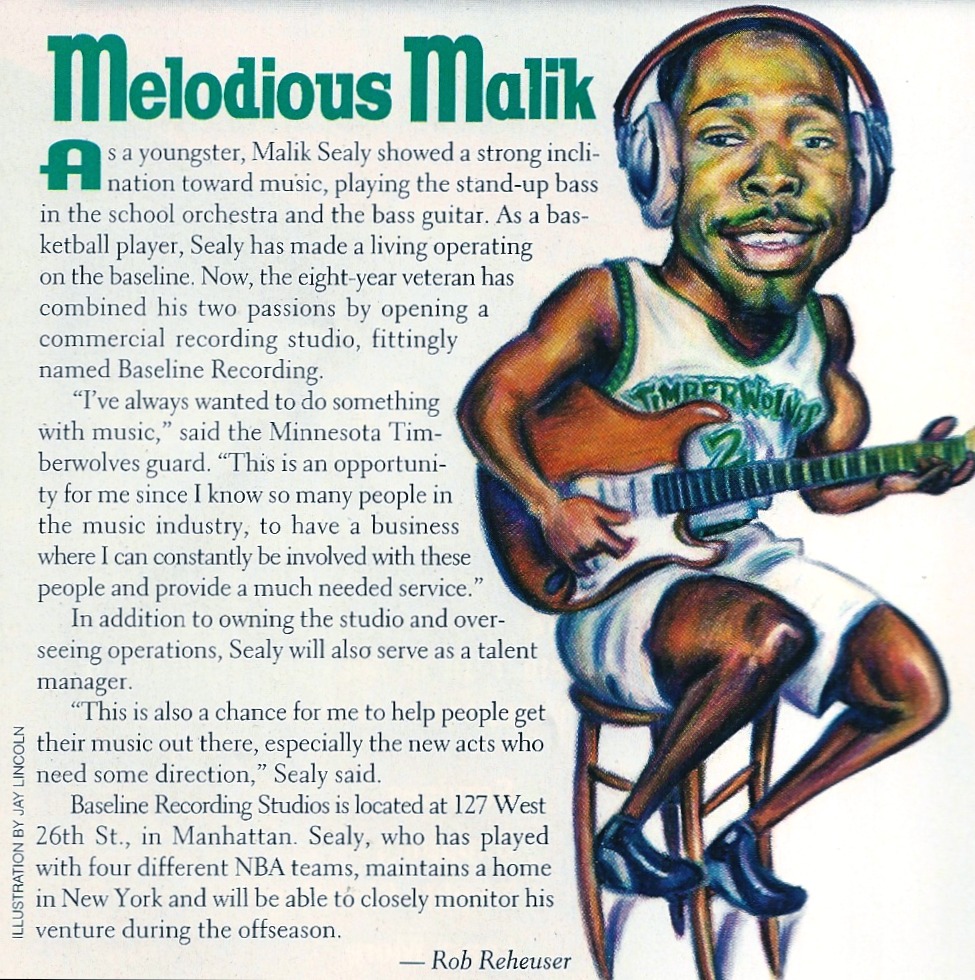
Ohh, Malik Sealy. Black skinned with occasionally unkempt hair, pride of the Bronx with lanky arms dangling. 6’8” with wiry muscles that stretched across the wings of the court. Built like a skinnier, darker Scottie Pippen. I know him as much for his city roots, for his St. Johns tenure as I do for his pro game. He was pure NYC like Felipe Lopez, Chris Mullin, Mark Jackson and Johnnies orange of the Lou Carnesecca days. He was Bronx-born, St. Johns raised and Minnesota died. I can’t expand on his basketball career without acknowledging that he was killed at 30 in car wreck in Minnesota of all places – a world away from the borough that raised him.

His pro journey was a split between the sun-faded highways of Los Angeles as a Clipper and a trans-Midwestern expedition with stops in Indiana, Detroit, and finally Minnesota. He was a mediocre shooter from distance who started less than half of his games as a pro. He was a steady pro of the supporting variety, a glue guy who averaged a hair over 10ppg for his career. When I think of a comparable modern-day player, it’s coincidence that another Minnesota player comes to mind. Corey Brewer is similarly productive, but with a completely different style and set of histrionics.  

But as I’ve written this, I struggle to separate Sealy’s life from his tragic death. It’s an unfair memory that taints what would ideally be a fond, lighthearted memory with a few softball jokes. But what’s there to joke about when a 30-year-old man had his life taken by a drunk driver?

tumblr_mka902aoYw1qzc69yo1_r1_1280.png

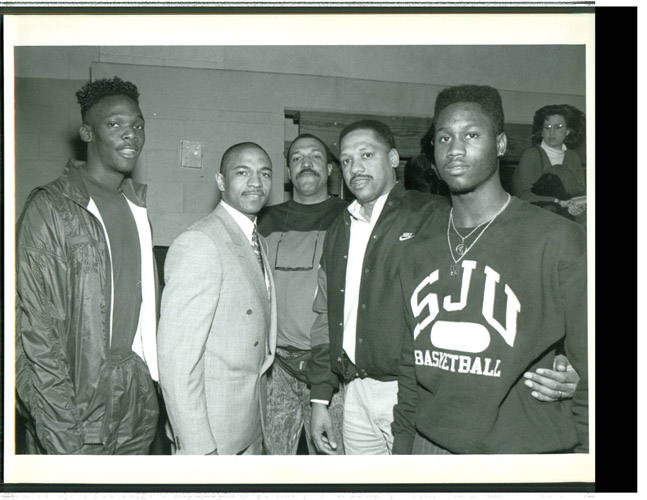
Malik-Sealy-Mark-Jackson-Ron-Rutledge-Chucky-Sproling1

NBA Biographical Sketch #8: Chris Dudley

Even though he only played there for a handful of his NBA seasons, I’ll always remember Chris Dudley as a New Jersey Net of the powdery, cloudy-blue uniform-wearing variety. The Nets that had Derrick Coleman and Chris Morris and Drazen Petrovic. Dudley was a career bad player by NBA standards. He’s one of those guys who averaged nearly as many fouls as points, but if it’s one thing we learn about usefulness, it’s that being sexy isn’t the only way to make a baby. If that doesn’t make sense, that’s fine, but just know that Dudley made a career of being physical, defensive-minded center. He appeared in 886 career games from 1987 to 2003 and made over $35-million playing basketball. One year, the loose-pocketed Knicks even gave him $7.1-million – and this was a year he averaged 1.2 points and 2.1 fouls.

Dudley, all big white man shoulders and friendly haircut. He was a Yale graduate, the only one in the NBA’s history, but where some of us make dumb assumptions like white people from Yale should be good free throw shooters, Dudley proves our ignorant bias by shooting a putrid 46% from the line for his career.

There’s a lot more to the Chris Dudley story, but in terms of basketball, this is the man I remember.

NBA Biographical Sketch #7: Michael Cage

I remember a couple things about Michael Cage:

  1. He was a rebounding king
  2. He wore a jheri curl

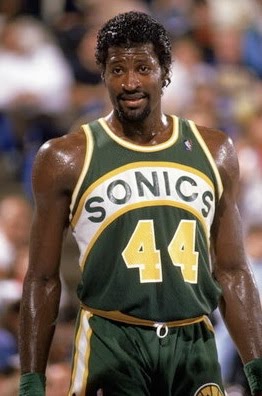
While the former should be the focus of this sketch, I can’t help but consider my memory of Cage’s dark skin glistening with sweat, strong stretching hands corralling yet another rebound, exhaling, sweat flying and that jheri curl resting intact, maybe bouncing ever so slightly as Cage throws an outlet pass and runs the floor. Cage’s best years were with the Clippers and Sonics and he wore the jheri until at least his Sonics days. It was sometime in the 90s that he retired that dying do, exchanging it for a more contemporary, more assimilated low fade. Cage adopted the fade sometime after the jheri was infamously mocked (and likely ruined for many) by Eriq LaSalle’s character in Coming to America.

But Cage was clearly more than a hairstyle. He was a rebounding champion (13rpg in 1988), a 6’9” power forward/center with a classically v-shaped frame prone to casual lefty dunks and an unflashy, functional style of play. The highlight video below is mostly uninspiring by today’s standards—with the exception of the last five seconds. From a purely statistical output perspective, Cage brings to mind Troy Murphy. The comparisons end there though as Murphy was an auburn-haired, pasty-colored distance shooting big while Cage was nicknamed “John Shaft.”


michael cage

NBA Biographical Sketch #6: Aaron McKie

You remember Aaron McKie? You do. Combo guard, Philadelphia through and through. Through to the point that he was a Temple grad. Philly to the point that he went to Simon Gratz (I just learned this). City of Brotherly Love to the point that he was black like The Roots (all the way live from 2-1-5) with a goatee, but not a beard. He wasn’t drafted by the 76ers, but somehow, through some cosmic Andrew Toneyisms and Eric Snowdens, his qi guided him back home. McKie was a big-bodied, defensive minded, role playing guard. A physical presence to counterbalance the reckless litheness of Allen Iverson. McKie wasn’t much of a jump shooter and he cut against the grain of things by wearing number eight, but he was a lunch pail and hardhat guy in a blue collar, frill-free way that Philly can embrace. McKie embodied his hometown: Philly like a cold wind, Philly like booing an injured opponent, Philly like unfair expectations, Philly like Von Hayes.

For present-day comparisons, feel free to compare McKie to a more horizontal and technical, less athletic version of Tony Allen.

NBA Biographical Sketch #5: Dan Majerle

Dan Majerle was a 6’6” shooting guard with model good looks, a square jaw, a full head of brown hair, and a tan of Hasselhoffian proportions. “Thunder Dan” as he was known bombed threes before it became en vogue. In that sense, one could say he was ahead of his time. Sandwiched between a career spent in sunny Phoenix and on the sandy beaches of Miami was an out of context year in Cleveland which signaled the onset of his deterioration in which he possibly could’ve been referred to as “Cloudy Dan” by someone with a poor sense of humor. Majerle will forever be remembered for his role on the Barkley-led Suns teams and for being an object of the great Michael Jordan’s disdain in the 1993 Finals.

A three-time all-star, Majerle could oddly be considered a beiger, more pleasant version of Arron Afflalo or even a darker, more muscularly violent (in play only) version of Brent Barry.

In the commercial below, “Thunder Dan” can be heard asking for a stat that quantifies hustle (again, ahead of his time). While this may have been one of his calling cards, it’s not one with which I’m deeply familiar. If someone was bored, they could easily sub in Shane Battier footage with Majerle’s commentary.

NBA Biographical Sketch #2: Mark West

There’s so little I know about Mark West. He was an undersized (6’10”) starting center on a series of competitive Suns teams. He wore number 41 and was black with black moustache. He always shot well from the field (research shows he’s fourth all-time in career FG%). On first glance, without the benefit of seeing or knowing his height, he could’ve been anything, worked any job in any business or trade. Picture Mark West in a hard hat or a suit and tie and it’s the same; a trooper, a worker bee, a brick in the wall. This isn’t a slight on West by any means as the majority of us move through life as relative bricks in relative walls.

But Mark West was tall and while he may have been average by NBA standards, he had enough ability to stick for 17 seasons. Those Suns seasons when many of us probably remember him were spent in a supporting role to bigger and brighter stars and personalities like Kevin Johnson, Xavier McDaniel, Chuck Barkley, Dan Majerle, Jeff Hornacek and was even outshone by coach Paul Westphal. West also attended Old Dominion University and is profiled in a video below during his ODU days. A fair comparison in terms of present-day ability is a lesser version of Emeka Okafor – an undersized defensive center clearly attuned to his role within the team dynamic.

Mark West on left sharing a laugh with current Suns coach Jeff Hornacek

Mark West on left sharing a laugh with current Suns coach Jeff Hornacek

NBA Biographical Sketch #1: Tom Chambers

Tom Chambers was an ultra-athletic white guy who played power forward for 16 seasons in the NBA and was known primarily for his time with the Suns and Sonics. At 6’10”, he used a combination of size, skill, and athleticism most effectively on the offensive side of the ball where he was a career 18ppg scorer and maxed out with seasons of 25 and 27ppg. He struggled to get notoriety against the bigger and bolder bodies of work of Barkley and Karl Malone, but make no mistake, this one-time all-star MVP was like a more fluid, less violent version of Amare Stoudemire.

My strongest memories of Chambers are dunk-related. As a kid, I played the shit out of some Sega Genesis and the pixelated Tom Chambers looked like some kind of tanned surfer-turned-basketball player with an array of dunks so unfathomable as to appear as if he sprouted from the imagination of a panel of dunk gods insistent on challenging existing dunker archetypes. In truth, his pixelated doppelganger was likely inspired by his legendary dunk on Mark Jackson in which he caught the ball on a break and used the chest of the 6’3” Jackson as a springboard to reach heights that wouldn’t be realized until the Blake Griffin/LeBron James era of dunkers.

Strange Satisfactions

steve-nash-dwight-howard-si-cover

Less than Fun

I’m a Lakers fan. Make no mistake about it. Beneath all my demands for fairness and bridging the rich-poor gap acrimony, I still cheer for the Lakers and their “see money, throw a problem at it” philosophy. So you can imagine my curiosity last year when I’m watching the Lakers slowly implode like a basketball version of an ugly, slow, painful deterioration of something or someone you know. Maybe it’s like when Brittney Spears fell off the rails in public and her fans just sat there and watched and they probably wanted to help her … “If I just had a chance, I could help Britt.” I can see some Lakers fans convinced they had solutions to the incurable problems the team had last season. But not me. I wasn’t one of those fans. I sat back and watched in enraptured entertainment. Kobe Bryant, Dwight Howard, Steve Nash, Pau Gasol. So many of us presumed that the star power alone would blind opponents, leaving them defenseless to an onslaught of well-aged skill and Howardian beastliness down low. And when the reality of age and fragility set in and the team underachieved for so many games, those shining stars dimmed to a cynical glow and Lakers fans frowned and grunted through an extended shit show where nothing made sense and everything went wrong.

All the while I sat bewildered, but unexpectedly entertained. In the NBA more so than the NFL or MLB, you can pick a handful of contenders at the beginning of the season and be fairly confident in your assessments. For all of us to whiff so badly last year; including the Kupchaks and Busses of the world … well, it was like watching a Hollywood blockbuster with one of our favorite action heroes as the star, but only the script goes off somewhere. The hero doesn’t fit the prototype we’re trained to recognize. Superman can’t change into his blue spandex in the phone booth let alone fly through the air. The Batmobile catches a flat and Bruce Wayne has to wait for Alfred to show up and change the tire. Meanwhile, Lex Luther and the Joker are taking a big ol’ dump on Metropolis and Gotham. That was the Lakers we saw last season.

Now in the fall of 2013, on the cusp of another NBA season, I’m all settled in, prepared for a crummy Lakers campaign that rivals the miserable outcomes of the post-Shaq Lakers like 2005 when Kobe “led” the team to 34 wins. But the difference is obviously that we’re prepared for it now. That preparation or expectation is the critical piece. When we know what to expect, we can maintain an even keel while still experiencing fluctuations in emotions. It’s the unexpected that challenges our conditioned responses.

You might be wondering why I’m just now drifting back to these Lakers memories. After all, we’re several months removed from the realization that the Lakers were not who we thought they were. A couple of my other favorite teams are presently walking through their own purgatories of expectation and I’m reflexively flashing back:

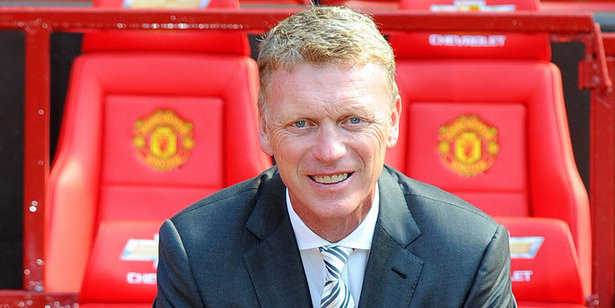
The current Manchester United team, another team I support (go ahead, make your front-runner jokes, but know I’m a long-suffering Cubs fan as well and experience both sides of the winning/losing of fandom), is enduring a challenging season with their new skipper, David Moyes. Moyes is replacing the living legend, Sir Alex Ferguson, who managed the world’s most recognizable sports franchise for over 26 years. In that span, he etched out a profile for himself that, on a global scale, exceeds that of Pat Riley, Red Auerbach, Phil Jackson and all the rest. Ferguson was an anomaly in the English Premier League where clubs cycle through managers more frequently than most of us go through a pair of jeans. United has mostly the same roster they had last year when the dominated the league and secured the title with multiple weeks still to play. It was fantastically anti-climactic and Ferguson left the new manager with a sturdy foundation on which to build a new legacy for himself and his new club. Instead, nine matches into the new season and United has struggled with a miserable defense that is regularly outplayed and compounds their shortcomings with knuckleheaded decision making and lapses in discipline. Yet … as I watch the team, I’m taking a strange satisfaction in the struggle. It’s not a sporting masochism. In the case of United, there’s this part of me that’s enjoying the uphill climb of this underachieving group. Maybe it’s because it’s still early in the season and I have faith that they’ll figure it out, that patience will win the day. Or maybe it’s just the feeling of stepping into a different, less comfortable role. Maybe I feel better being on more relatable terms with my friend who’s a Tottenham supporter? Or maybe I’m just a confused elitist who’s confusing the struggle with a footballing equivalent of slumming. Either way, it’s a more engrossing feeling than the anticlimactic sprint away from a pedestrian pack.

David Moyes

David Moyes

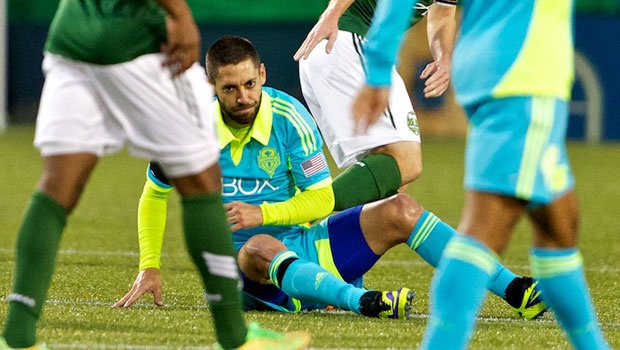
At home, my Seattle Sounders are flailing through the final few weeks of a grueling MLS regular season. Where the team was riding the natural high of an eight-match unbeaten streak that saw them climb to the top of league standings, they’ve now lost four straight matches by a 2-12 deficit. The Sounders haven’t won a match since mid-September. Players are hurt, the defense is in shambles, luck favors their opponents and yet, I find their matches more magnetizing than ever. I tune in or go to matches wondering if this is the game they turn it around. I anticipate the euphoria that must come with a break from these autumnal doldrums. With the MLS playoffs a week away, the Sounders somehow backed into the playoffs, and instead of drinking myself to sleep or crying tears of blue and rave green discontent, I’m cautiously hopeful that things will turn and we’ll look back on this rough stretch as nothing more than a funky smelling aberration. Something to share a beer over and thank the soccer gods it’s passed.

Familiar site. Not fun to see.

Familiar site. Not fun to see.

Let’s be real here … maybe I just don’t know how to be a fan. Maybe there’s some twisted gene hiding in my DNA that’s afraid of the pressure that accompanies a winner. Maybe I just don’t get what it means to be a fan, because I’d expect a different reaction. I’d expect to be pissed off or pouty about these things, but I just accept it with curious observation. The 2013 Lakers, Sounders and Man United teams have stumbled into strange playoff positions with dust-covered aging rosters and defenses that can be exploited by younger, less-skilled opponents. And I sit back and take it all in with a chuckle at the unexpected deviation from the narrative and the strange satisfaction I feel from not knowing what’s coming next. The Lakers, Sounders and United … my teams, my disappointments, my entertainments through winning, losing, and all points beyond and between.