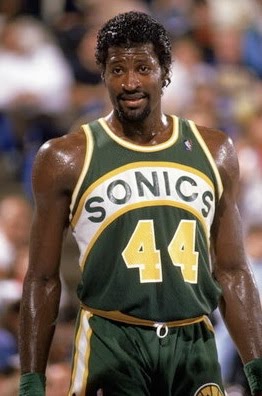
While the former should be the focus of this sketch, I can’t help but consider my memory of Cage’s dark skin glistening with sweat, strong stretching hands corralling yet another rebound, exhaling, sweat flying and that jheri curl resting intact, maybe bouncing ever so slightly as Cage throws an outlet pass and runs the floor. Cage’s best years were with the Clippers and Sonics and he wore the jheri until at least his Sonics days. It was sometime in the 90s that he retired that dying do, exchanging it for a more contemporary, more assimilated low fade. Cage adopted the fade sometime after the jheri was infamously mocked (and likely ruined for many) by Eriq LaSalle’s character in Coming to America.
But Cage was clearly more than a hairstyle. He was a rebounding champion (13rpg in 1988), a 6’9” power forward/center with a classically v-shaped frame prone to casual lefty dunks and an unflashy, functional style of play. The highlight video below is mostly uninspiring by today’s standards—with the exception of the last five seconds. From a purely statistical output perspective, Cage brings to mind Troy Murphy. The comparisons end there though as Murphy was an auburn-haired, pasty-colored distance shooting big while Cage was nicknamed “John Shaft.”
You remember Aaron McKie? You do. Combo guard, Philadelphia through and through. Through to the point that he was a Temple grad. Philly to the point that he went to Simon Gratz (I just learned this). City of Brotherly Love to the point that he was black like The Roots (all the way live from 2-1-5) with a goatee, but not a beard. He wasn’t drafted by the 76ers, but somehow, through some cosmic Andrew Toneyisms and Eric Snowdens, his qi guided him back home. McKie was a big-bodied, defensive minded, role playing guard. A physical presence to counterbalance the reckless litheness of Allen Iverson. McKie wasn’t much of a jump shooter and he cut against the grain of things by wearing number eight, but he was a lunch pail and hardhat guy in a blue collar, frill-free way that Philly can embrace. McKie embodied his hometown: Philly like a cold wind, Philly like booing an injured opponent, Philly like unfair expectations, Philly like Von Hayes.
For present-day comparisons, feel free to compare McKie to a more horizontal and technical, less athletic version of Tony Allen.
Dan Majerle was a 6’6” shooting guard with model good looks, a square jaw, a full head of brown hair, and a tan of Hasselhoffian proportions. “Thunder Dan” as he was known bombed threes before it became en vogue. In that sense, one could say he was ahead of his time. Sandwiched between a career spent in sunny Phoenix and on the sandy beaches of Miami was an out of context year in Cleveland which signaled the onset of his deterioration in which he possibly could’ve been referred to as “Cloudy Dan” by someone with a poor sense of humor. Majerle will forever be remembered for his role on the Barkley-led Suns teams and for being an object of the great Michael Jordan’s disdain in the 1993 Finals.
A three-time all-star, Majerle could oddly be considered a beiger, more pleasant version of Arron Afflalo or even a darker, more muscularly violent (in play only) version of Brent Barry.
In the commercial below, “Thunder Dan” can be heard asking for a stat that quantifies hustle (again, ahead of his time). While this may have been one of his calling cards, it’s not one with which I’m deeply familiar. If someone was bored, they could easily sub in Shane Battier footage with Majerle’s commentary.
Dino Radja was a 6’11”, somewhat sallow-colored offensive-minded front court player for the Boston Celtics in the early-to-mid 90s. His time with the Celtics was spent shedding defenders with his patented baseline spin move and deftly scoring in and around the hoop (he maxed out at ~20 and 10 in 1996) while assimilating into the Celtics culture by wearing bulky, bulging, inky black sneakers just as Bird, McHale, and Parrish had done before him. The black shoes these Celtics wore brought to mind something weighty like an anvil or some industrial-era workman’s footwear – not basketball shoes. Radja was also a member of the 1992 Croatian Olympic team; a group that featured Toni Kukoc, Drazen Petrovic and Zan Tabak and in another time and place, may have won gold. There’s certainly more to Radja’s story, but alas the NBA chapter is short as he appeared in just four seasons and played an average of 56 games/year. His tenure in the league, and more specifically the Celtics and then-coach Rick Pitino, ended disappointingly:
I went to Pitino and asked him if I fit into his plans. With a new coach, I obviously wanted to know what he thought of my game. I loved playing for Boston and just wanted to find out if there was any possibility I might be traded, because I had heard some rumors. Pitino looked me right in the eyes and said, ‘Dino, don’t worry. You’re going to be a big part of our offense. When we run a set play, the ball is going to go through you.’ I left the meeting feeling great. Five days later, I found out I was being traded to Philadelphia. I can’t tell you how much I felt betrayed. Either Pitino lied or something changed in a matter of a few days.
When I picture Sedale Threatt in my mind’s eye, he’s darker than he actually was, his head is so cleanly shaved that one might wonder if it even contains hair follicles, and his hands are like knives, slicing and stabbing away at the ball from absentminded ball-handlers and clumsy clods. Even in my minimal research, it turns out he was referred to as “The Thief.” Threatt was short for a combo guard (6’2”) and spent five of his 13 seasons in a Lakers uniform, but I also associate him with the Sonics where he spent four years. If you want to consider a modern-day Threatt, look to Mario Chalmers; another thieving point guard, but on less offensively aggressive by circumstance, but superior from the perimeter.
Additional Threatt research confirmed my suspicions that Threatt had some infamous off-court issues; namely that he may “have as many as 14” children and wasn’t paying child support.
I struggled about whether or not to include the reference to Threatt’s off-court issues, but ultimately decided on adding them as they make up part of my Threatt-related consciousness. In some cases, this can be problematic as certain athletes have their on-court/on-field personas unfairly overshadowed by off-field activities. As I move through these sketches, I will likely address legal or personal issues on a case-by-case basis and strive to be unbiased.
There’s so little I know about Mark West. He was an undersized (6’10”) starting center on a series of competitive Suns teams. He wore number 41 and was black with black moustache. He always shot well from the field (research shows he’s fourth all-time in career FG%). On first glance, without the benefit of seeing or knowing his height, he could’ve been anything, worked any job in any business or trade. Picture Mark West in a hard hat or a suit and tie and it’s the same; a trooper, a worker bee, a brick in the wall. This isn’t a slight on West by any means as the majority of us move through life as relative bricks in relative walls.
But Mark West was tall and while he may have been average by NBA standards, he had enough ability to stick for 17 seasons. Those Suns seasons when many of us probably remember him were spent in a supporting role to bigger and brighter stars and personalities like Kevin Johnson, Xavier McDaniel, Chuck Barkley, Dan Majerle, Jeff Hornacek and was even outshone by coach Paul Westphal. West also attended Old Dominion University and is profiled in a video below during his ODU days. A fair comparison in terms of present-day ability is a lesser version of Emeka Okafor – an undersized defensive center clearly attuned to his role within the team dynamic.
Mark West on left sharing a laugh with current Suns coach Jeff Hornacek
Tom Chambers was an ultra-athletic white guy who played power forward for 16 seasons in the NBA and was known primarily for his time with the Suns and Sonics. At 6’10”, he used a combination of size, skill, and athleticism most effectively on the offensive side of the ball where he was a career 18ppg scorer and maxed out with seasons of 25 and 27ppg. He struggled to get notoriety against the bigger and bolder bodies of work of Barkley and Karl Malone, but make no mistake, this one-time all-star MVP was like a more fluid, less violent version of Amare Stoudemire.
My strongest memories of Chambers are dunk-related. As a kid, I played the shit out of some Sega Genesis and the pixelated Tom Chambers looked like some kind of tanned surfer-turned-basketball player with an array of dunks so unfathomable as to appear as if he sprouted from the imagination of a panel of dunk gods insistent on challenging existing dunker archetypes. In truth, his pixelated doppelganger was likely inspired by his legendary dunk on Mark Jackson in which he caught the ball on a break and used the chest of the 6’3” Jackson as a springboard to reach heights that wouldn’t be realized until the Blake Griffin/LeBron James era of dunkers.
Hard to imagine it was over 20 years ago that Michigan’s Fab Five played Duke in the NCAA Finals, but we’re 21-years on and counting. I was reminded of the Fab Five charging into the basketball world like bald mayhem bringing news of change wearing long shorts, black socks, and attitude to spare. I was just 11-years-old at the time. A University of Iowa fan (read: Jess Settles, Chris Kingsbury, Andre Woolridge, Tom Davis); I didn’t catch on to the blue and gold bandwagon until Webber and Rose were on the way out. It was more about the cool than it was any Schembechlerian blood coursing through my veins. I had to have that maize Jalen Rose jersey because the little version of me attached value to material things. It couldn’t be Webber because he was the obvious superstar. It had to be Rose; the subversive 6’8” impossibly long point with the bald head, mumbling motor mouth, and pencil thin mustache that he wouldn’t actually grow for a few years – it’s just how I remember him. I read Mitch Albom’s Fab Five: Basketball, Trash Talk, The American Dream with the enthusiasm of a teenage hoop dreaming disciple somehow merging my athletically-challenged basketball fantasies with the realities of the black kids Albom so meticulously framed in Fab Five.
Over the years, I haven’t dwelled on the Fab Five or their back-to-back finals appearances in ’92 and ’93. Then I was reading the Sports Illustrated college hoops preview issue with a little section dedicated to John Calipari’s Kentucky Wildcats and the seven freshmen in line for big minutes this season. These days, it’s standard operating procedure to reference the Fab Five any time you’re talking or writing about a strong freshmen class, but this group of Wildcats, while they may or may not be better, are deeper, and may end up more accomplished; they won’t make a mark anywhere remotely similar to that Michigan group. Even Aaron Harrison, one of the freshman starters on this Kentucky team acknowledged as much: “It’s amazing not just what they did on the court but how they were a part of pop culture.” Granted, Harrison wasn’t alive when the Fab Five were reshaping basketball in America, but he’s seen the Fab Five 30 for 30 on ESPN.
It was in this SI piece where I came across a reference to the NCAA Vault; a strange archival warehouse free to anyone with a computer and halfway decent internet connection that includes over 300 games and over 4,000 highlights from the NCAA Tournament dating back to 1976. How do I know these exact numbers? Because the site also includes a handy Media Guide with quick-access URLs for every game. The user interface is simple to use as it allows visitors to apply a variety of different filters to find old games and revisit old memories. There are no registrations, no usernames, no passwords, and, best of all, it’s free. As I stumbled into this vast record of nostalgia, I had to cast a shifty glare in the direction of the NBA where a cavernous library of game footage sits in some giant safety deposit box, gathering dust, waiting for the NBA to figure out how to best monetize the content.
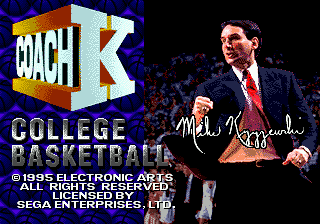
Now’s a good time to mention that my former love affair with college basketball has grown cold with the knowledge of the exploitation that takes place at the collegiate ranks (the one-and-done trend destroys continuity as well). That Jalen Rose jersey I mentioned earlier? It was Rose’s number five, inspired by Rose, in existence only because of Rose, but the young guard from Southwest Detroit didn’t benefit from its sale. I used to spend hours in front of the TV, playing Coach K on Sega Genesis; using old school teams with player numbers instead of names – because the NCAA and EA Sports used a little loophole to make gaggles of money without having to give any to these kids for profiting on their likeness. There were eight classic teams and I was so overzealous about this squad that I wrote EA Sports inquiring as to why Michigan’s Fab Five teams weren’t included among the other classic rosters. They even responded and I walked away satisfied; not at having made a change in the world of video games, because of course they didn’t magically add the Fab Five, but because I had been heard. I also have this foggy memory of playing Coach K and using Ed O’Bannon’s UCLA team; ironic given the recent class action lawsuit against the NCAA led by O’Bannon.
So my relationship with college basketball is complex. There are these memories that date back over twenty years, as real as the games that Chris Webber played in at Michigan and the banners that once hung in the rafters there, but which have been vaporized from the record books like simple signs of dissent in Nineteen Eighty-Four. In other ways my memories are stained with the knowledge of a ruling class of college athletics, made up of TV execs, Athletic Directors, and university presidents, preaching the gospel of an unbelievable and outdated amateurism while lining their bulging pockets with money spent by parents on jerseys and video games and other useless collegiate memorabilia.
I’m human though with all my breakable bones and shitty ideas and so I gave into the muse of nostalgia and indulged the NCAA Vault. With my leftover chicken fried rice and a beer, I sat down with a notebook, clicked the play button and watched the 1992 NCAA Final.
I’m not sure what I was expecting. I knew the outcome, knew that Michigan lost 71-51, that the dreaded (Blue) Devils of Duke walked away with their second title in a row. I know I’d be disappointed and all along found myself looking for these what-if moments. What if Webber didn’t get in foul trouble (two of his first three fouls were tick-tack) and play tentative defense as a result? What if Michigan could hit a shot outside of the lane? What if Billy Packer didn’t say dumb shit like, “Kamikaze pressure?” None of it mattered though. No basketball mind tricks could change the truth: It was a terrible basketball game that happened to be close for about 33-and-a-half minutes. Even when Michigan kept it tight and took a lead into the second half, Duke looked like the better team. Michigan made stupid mistakes, dumb passes, had child-like miscommunications while Duke just missed shots and gave up offensive rebounds. Combined, they committed 34 turnovers (20 for Michigan, 14 for Duke) and shot 41% from the field with the Wolverines going 1-11 from three. Not surprisingly, a 45-second shot clock didn’t enhance the watchability of the second half. As Duke established a lead and their scrawny senior point guard went to the bench with foul trouble, their offense shifted into clock-wasting mode and spent at least 35-seconds/possession playing hot potato with the ball 40-feet from the hoop – and this started with something like eight minutes to go in the game.
The very little redemption I could pick out of this shit-stack of unfulfilling basketball was the obviousness of Webber’s ability. Where Laettner, Hurley, and even Grant Hill appeared to be merely strong college players with questionable pro futures ahead, Webber’s fluid athleticism was on full display and punctuated by his gracefully pushed fast break through defenders and behind-the-back pass to a cutting teammate for the score. Packer, for all his Laettner-jocking, compared one of Webber’s post moves to James Worthy and it made perfect sense: the freshman version of Webber had the quickness and explosiveness of an NBA small forward. Rose, Jimmy King, and Grant Hill had flashes of the pro-style ability, even those moments were fleeting and overshadowed by poor decision making and execution.
There’s so much and so little to take away from this experience. I don’t know if I’ll watch another game on the Vault, but I could see it being useful for re-watching old classics (don’t be surprised if you walk away underwhelmed and unfulfilled) or exploring the early developments of players like Patrick Ewing, MJ, Olajuwon, etc, or maybe just passing the time on a rainy day in the off-season. The NCAA’s delivered its fair share of dramatic sporting experiences and memories over the years and I’m thankful for that, but it’s difficult to watch these events unfold, even in retrospect, with the knowledge that so much has come from lies, greed, and hypocrisy.
I’m a Lakers fan. Make no mistake about it. Beneath all my demands for fairness and bridging the rich-poor gap acrimony, I still cheer for the Lakers and their “see money, throw a problem at it” philosophy. So you can imagine my curiosity last year when I’m watching the Lakers slowly implode like a basketball version of an ugly, slow, painful deterioration of something or someone you know. Maybe it’s like when Brittney Spears fell off the rails in public and her fans just sat there and watched and they probably wanted to help her … “If I just had a chance, I could help Britt.” I can see some Lakers fans convinced they had solutions to the incurable problems the team had last season. But not me. I wasn’t one of those fans. I sat back and watched in enraptured entertainment. Kobe Bryant, Dwight Howard, Steve Nash, Pau Gasol. So many of us presumed that the star power alone would blind opponents, leaving them defenseless to an onslaught of well-aged skill and Howardian beastliness down low. And when the reality of age and fragility set in and the team underachieved for so many games, those shining stars dimmed to a cynical glow and Lakers fans frowned and grunted through an extended shit show where nothing made sense and everything went wrong.
All the while I sat bewildered, but unexpectedly entertained. In the NBA more so than the NFL or MLB, you can pick a handful of contenders at the beginning of the season and be fairly confident in your assessments. For all of us to whiff so badly last year; including the Kupchaks and Busses of the world … well, it was like watching a Hollywood blockbuster with one of our favorite action heroes as the star, but only the script goes off somewhere. The hero doesn’t fit the prototype we’re trained to recognize. Superman can’t change into his blue spandex in the phone booth let alone fly through the air. The Batmobile catches a flat and Bruce Wayne has to wait for Alfred to show up and change the tire. Meanwhile, Lex Luther and the Joker are taking a big ol’ dump on Metropolis and Gotham. That was the Lakers we saw last season.
Now in the fall of 2013, on the cusp of another NBA season, I’m all settled in, prepared for a crummy Lakers campaign that rivals the miserable outcomes of the post-Shaq Lakers like 2005 when Kobe “led” the team to 34 wins. But the difference is obviously that we’re prepared for it now. That preparation or expectation is the critical piece. When we know what to expect, we can maintain an even keel while still experiencing fluctuations in emotions. It’s the unexpected that challenges our conditioned responses.
You might be wondering why I’m just now drifting back to these Lakers memories. After all, we’re several months removed from the realization that the Lakers were not who we thought they were. A couple of my other favorite teams are presently walking through their own purgatories of expectation and I’m reflexively flashing back:
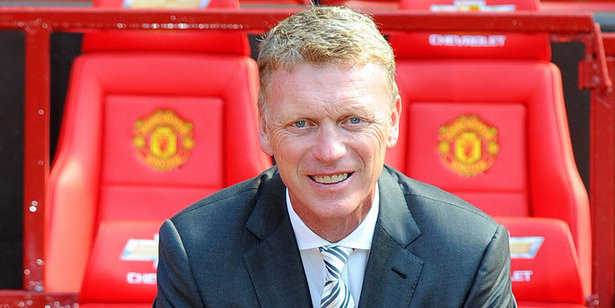
The current Manchester United team, another team I support (go ahead, make your front-runner jokes, but know I’m a long-suffering Cubs fan as well and experience both sides of the winning/losing of fandom), is enduring a challenging season with their new skipper, David Moyes. Moyes is replacing the living legend, Sir Alex Ferguson, who managed the world’s most recognizable sports franchise for over 26 years. In that span, he etched out a profile for himself that, on a global scale, exceeds that of Pat Riley, Red Auerbach, Phil Jackson and all the rest. Ferguson was an anomaly in the English Premier League where clubs cycle through managers more frequently than most of us go through a pair of jeans. United has mostly the same roster they had last year when the dominated the league and secured the title with multiple weeks still to play. It was fantastically anti-climactic and Ferguson left the new manager with a sturdy foundation on which to build a new legacy for himself and his new club. Instead, nine matches into the new season and United has struggled with a miserable defense that is regularly outplayed and compounds their shortcomings with knuckleheaded decision making and lapses in discipline. Yet … as I watch the team, I’m taking a strange satisfaction in the struggle. It’s not a sporting masochism. In the case of United, there’s this part of me that’s enjoying the uphill climb of this underachieving group. Maybe it’s because it’s still early in the season and I have faith that they’ll figure it out, that patience will win the day. Or maybe it’s just the feeling of stepping into a different, less comfortable role. Maybe I feel better being on more relatable terms with my friend who’s a Tottenham supporter? Or maybe I’m just a confused elitist who’s confusing the struggle with a footballing equivalent of slumming. Either way, it’s a more engrossing feeling than the anticlimactic sprint away from a pedestrian pack.
David Moyes
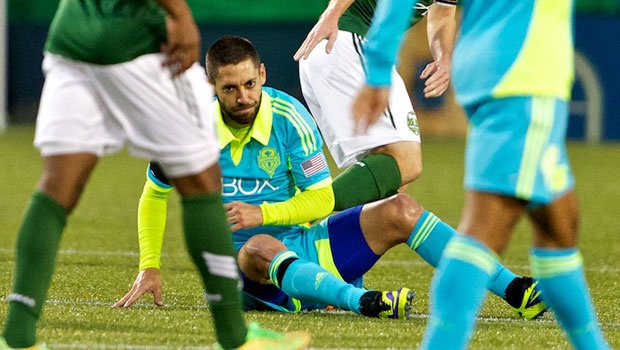
At home, my Seattle Sounders are flailing through the final few weeks of a grueling MLS regular season. Where the team was riding the natural high of an eight-match unbeaten streak that saw them climb to the top of league standings, they’ve now lost four straight matches by a 2-12 deficit. The Sounders haven’t won a match since mid-September. Players are hurt, the defense is in shambles, luck favors their opponents and yet, I find their matches more magnetizing than ever. I tune in or go to matches wondering if this is the game they turn it around. I anticipate the euphoria that must come with a break from these autumnal doldrums. With the MLS playoffs a week away, the Sounders somehow backed into the playoffs, and instead of drinking myself to sleep or crying tears of blue and rave green discontent, I’m cautiously hopeful that things will turn and we’ll look back on this rough stretch as nothing more than a funky smelling aberration. Something to share a beer over and thank the soccer gods it’s passed.
Familiar site. Not fun to see.
Let’s be real here … maybe I just don’t know how to be a fan. Maybe there’s some twisted gene hiding in my DNA that’s afraid of the pressure that accompanies a winner. Maybe I just don’t get what it means to be a fan, because I’d expect a different reaction. I’d expect to be pissed off or pouty about these things, but I just accept it with curious observation. The 2013 Lakers, Sounders and Man United teams have stumbled into strange playoff positions with dust-covered aging rosters and defenses that can be exploited by younger, less-skilled opponents. And I sit back and take it all in with a chuckle at the unexpected deviation from the narrative and the strange satisfaction I feel from not knowing what’s coming next. The Lakers, Sounders and United … my teams, my disappointments, my entertainments through winning, losing, and all points beyond and between.



 Dancing With Noah